Setting
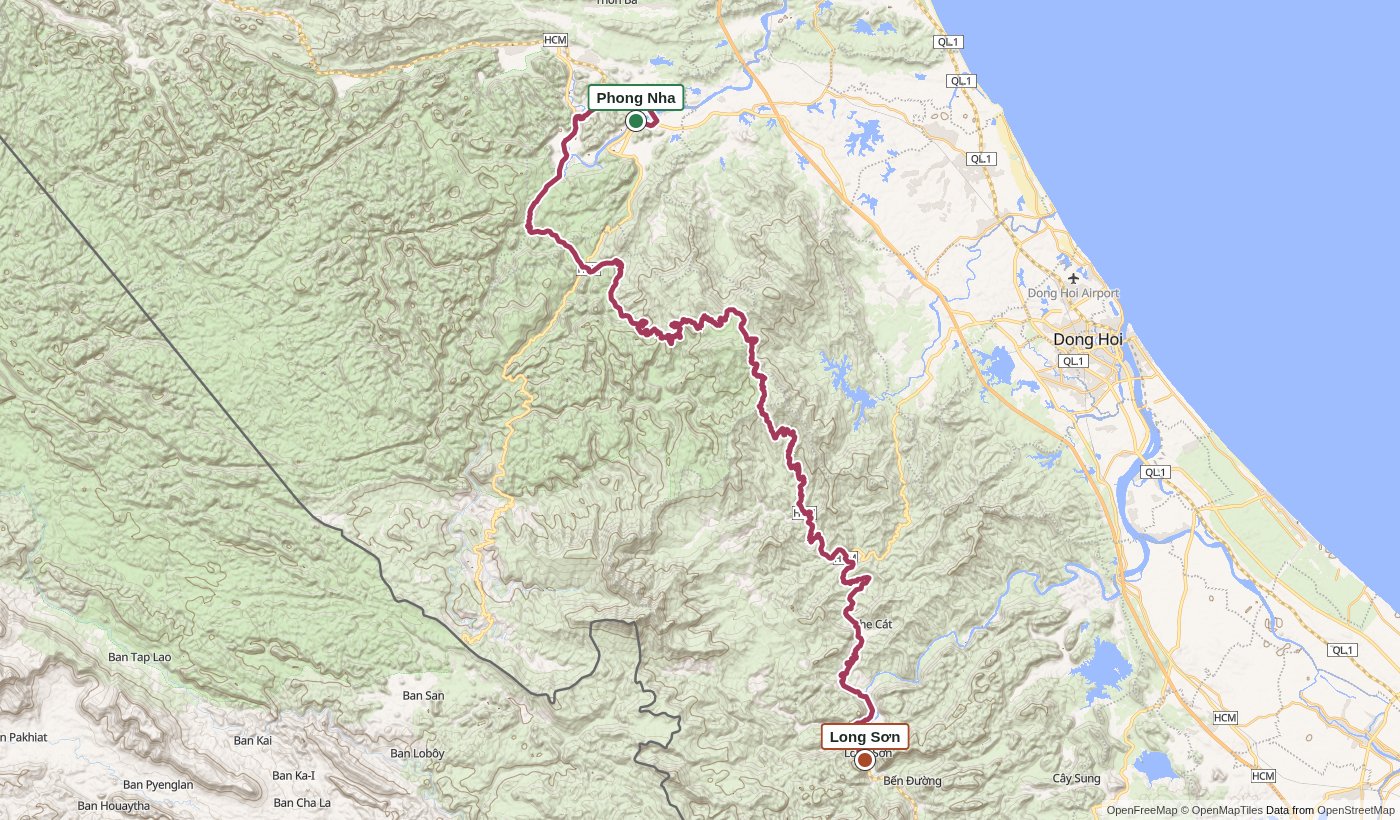
The road takes the western branch of the Hồ Chí Minh road south-west through Thượng Trạch, deep forest close to the Lao border, to Long Sơn.
Story
The western branch through Quảng Bình and Quảng Trị follows much of the wartime Trường Sơn trail. It is admired for its empty road through the great forest and the historic sites along it.
People
Bru-Vân Kiều and Chứt. At Thượng Trạch live the Ma Coong, a group of about 600 people within the Bru-Vân Kiều.
Population and livelihoods
Trường Sơn, the commune around Long Sơn, covers about 936 km² but has only about 8,500 people, about nine to the square kilometre. Bru-Vân Kiều make up most of the population of the old commune. People live from upland fields, crops and livestock, and the poverty rate is still high. Forest protection contracts and acacia are the other sources of income.
What makes it special
This is one of the emptiest stretches of good road in Vietnam. Carry fuel and water.
The peoples in more detail
Along the way: Bru-Vân Kiều, Chứt.
Bru-Vân Kiều (Vân Kiều, Trì, Khùa, Ma Coong)
Hill farmers on both sides of the old Hồ Chí Minh Trail, many of whom now grow coffee around Khe Sanh. The Ma Coong of Thượng Trạch hold a well-known drum festival.
Food: They love grilled food and soups of greens cooked with rice and fish or frogs.
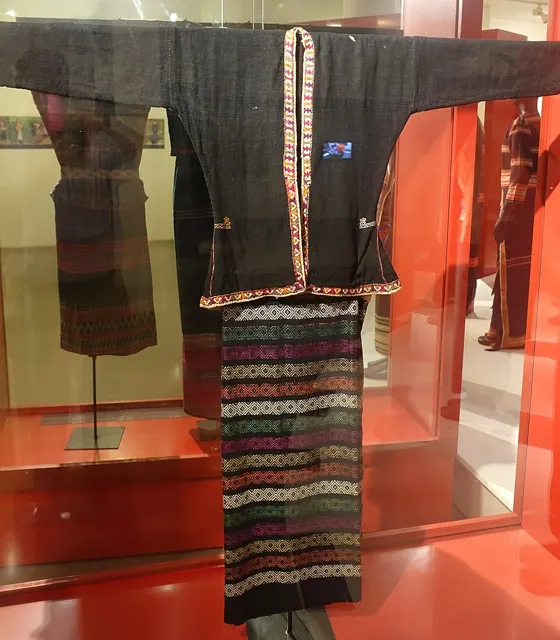
Dress: By custom men wore a loincloth and women a skirt with a sleeveless pullover top. Bark fibre was once used for clothing. The Bru-Vân Kiều did not weave, but for festivals women had a full outfit of skirt and long-sleeved tunic bought from across the Lao border. Neck rings, bracelets and earrings are the usual ornaments. Girls once wore their hair in a bun to the left, and married women on top of the head. Most people now dress like the Kinh, though women still wear the skirt.
Chứt (Sách, Mày, Rục, Arem, Mã Liềng)
A small group made up of several sub-groups, living in the limestone forests of Quảng Bình. The Rục and Arem lived mainly in caves and rock shelters until the mid-twentieth century.
Food: Maize and cassava.
Dress: The Chứt never wove cloth. They bought or bartered it from the Kinh and Lao along the border. Women wore skirts, and in winter people wore jackets made of bark. Today they dress like the Kinh.
Military history and figures
Military history
The west branch of the Hồ Chí Minh road follows the trail corridor south through Thượng Trạch.
Linked figures
Group 559, the trail command, is commemorated along the road. No single figure is singled out here.