Vietnam's ethnic groups
Vietnam officially recognises 54 ethnic groups, a list that has stood since 1979. The Kinh, or Việt, make up about 85% of the population. The other 53 groups number about 14 million people, roughly 15%, and most of them live in the mountains, which cover around two-thirds of the country. Eleven groups have fewer than 5,000 people.
The groups are classified by language into eight families: Việt–Mường, Tày–Thái, Mon–Khmer, Hmong–Dao, Kadai, Tibeto-Burman, Austronesian (Malayo-Polynesian) and Chinese. Many have sub-groups named after the colour or style of their dress, such as Black Hmong, Flower Hmong or Red Dao, and these are often what you notice first at a market.
The Northern Loop passes through the home areas of about 30 of them. Each group below has its own page with its language, population, dress, traditions and food, and links to the day pages where you meet them.
Minorities in Vietnamese society
Citizens first. Every member of a minority is a full Vietnamese citizen, subject to the same laws, courts, taxes and military service as the Kinh majority. There are no reservations or separate legal systems. The 2013 Constitution declares all ethnic groups equal and gives people in minority and mountain areas priority in education and health care.
Identity cards. Every citizen must hold the same chip-based căn cước card from the age of 14. Since July 2024 the front shows only name, date of birth, sex, nationality, place of birth registration and residence, but ethnicity is still recorded in the national population database and stored on the chip. It matters, because many grants, school places and quotas are tied to minority status.
Local government. Since 1 July 2025 Vietnam has had only two tiers of local government, provinces and communes. Districts were abolished, provinces cut from 63 to 34 and communes from about 10,000 to 3,321. On your route Hà Giang is now part of Tuyên Quang, Yên Bái has joined Lào Cai, Bắc Kạn has joined Thái Nguyên, Hòa Bình is part of Phú Thọ, Quảng Bình is part of Quảng Trị and Quảng Nam is part of Đà Nẵng. Cao Bằng, Lạng Sơn, Lai Châu, Điện Biên, Sơn La, Thanh Hóa, Nghệ An and Hà Tĩnh are unchanged. The commune People's Committee now handles births, marriages, land and most everyday paperwork. Old district names still appear on signs, maps and in conversation.
The village. Below the commune, each thôn or bản has an elected head who works with the local Party cell and the commune. Alongside this formal role the state recognises "prestigious persons" (người có uy tín): village elders, clan heads, shamans, religious leaders and respected farmers. They receive a small allowance and act as go-betweens between officials and villagers. Each village also has its own written convention (hương ước or quy ước) on matters such as weddings, funerals, livestock and forest use. The village drafts it and the commune People's Committee approves it. In minority villages the drafting team must include elders or village heads and someone who speaks the local language, and customary rules are kept if they do not conflict with the law.
Representation. At the March 2026 election, 76 of the 500 National Assembly deputies (15.2%) were from minorities, including the first deputy from the tiny Ơ Đu group, who live around Tương Dương on Highway 7 towards Kỳ Sơn. About 20% of commune council members are from minorities. National policy is run by the Ministry of Ethnic and Religious Affairs, formed on 1 March 2025 from the old Committee for Ethnic Minority Affairs.
Where custom and law meet. The law sets the minimum age for marriage at 18 for women and 20 for men, and bans marriage between relatives within three generations. Both still happen in remote areas, where a wedding is often held by custom and registered only later, if at all. Among the Hmong, the old custom of "pulling a wife" (kéo vợ) is now illegal when it is done without the woman's consent. The state's line is to keep "fine customs" and drop "backward" ones, which is why some practices in the entries that follow have faded.
Language, school and money. Vietnamese is the language of school and government. In 2019 about 89% of minority people could speak their own language and 81% could read and write Vietnamese, against roughly 95–97% among the Kinh. The gap is largest among older women: in Hà Giang only about a third of Hmong and La Chí women could read Vietnamese, compared with around 70% of the men. Many upland children board at state ethnic boarding schools, of which there are more than 300, plus over 1,000 semi-boarding schools. Minorities are about 15% of the population but made up 79% of the poor in 2020. The National Target Programme for ethnic minority and mountain areas (2021–2030) pays for roads, electricity, schools and housing.
In practice. Integration varies a great deal. The Tày, Nùng, Thái and Mường have lived alongside the state for centuries, and many of them are officials, teachers and traders. The Hmong, Lô Lô, Hà Nhì and the small Annamite groups live higher up and further from commune centres, with less Vietnamese and less schooling. For you as a visitor, homestay hosts must register your passport with the commune police, and border communes may ask to see it.
Colonial rule and the wars
Rule through local lords. French rule in the north from the 1880s split the country in two. The delta had civilian provinces, but from 1891 the mountains along the Chinese border were run as military territories under French officers. Rather than govern villages directly, the French restored the hereditary rights of local chiefs (thổ ty) and used them as their administrators. There were Tày and Nùng lords in the north-east and Mường lineages in Hòa Bình and Thanh Hóa, where only the Đinh, Quách, Bạch and Hà clans could rule. Thái lords ran the Black River valleys, and Hmong chiefs ran the Đồng Văn plateau, where the French divided the land between rival clans and taxed the opium trade.
Resistance. Some of the earliest armed opposition came from the hills. In the 1880s the Mường chief Hà Văn Mao of Bá Thước and the Thái leader Cầm Bá Thước joined the Cần Vương movement against the French in western Thanh Hóa. From 1918 to 1921 the Hmong rose under the messianic leader Pa Chay Vue against heavy taxes and abuse by Thái tax collectors. The revolt spread from the Sa Pa and Điện Biên areas into Laos before it was crushed. His base near Điện Biên is now a protected historic site.
The Việt Minh's cradle. In January 1941 Hồ Chí Minh came back from China to Pác Bó in Cao Bằng, and founded the Việt Minh there that May. Tày, Nùng, Dao and Hmong villagers hid and fed him, and within three months about 2,000 had joined its associations. Of the 34 men in the first unit of what became the People's Army, formed in Cao Bằng in December 1944, 29 were from minorities, mostly Tày and Nùng. On the Đồng Văn plateau the Hmong "king" Vương Chí Sình sided with Hồ Chí Minh. He became a member of the first National Assembly and gave the revolution 9 kg of gold.
Divide and rule, 1946–54. To win back the mountains, France created ethnic autonomous zones. In 1948 the Tai Federation, with its capital at Lai Châu, was put under the White Thái lord Đèo Văn Long. The Hmong, Dao, Lô Lô and Khơ Mú inside it were placed under Thái authority. A Nùng Autonomous Territory, which included Bình Liêu, was based at Móng Cái under the Ngái leader Vòng A Sáng. Minorities fought on both sides. The French garrison at Điện Biên Phủ included Thái auxiliary companies, while tens of thousands of Thái, Hmong, Dao and other porters carried rice and ammunition for the Việt Minh. After 1954 Vòng A Sáng and many of his followers moved south, where his Nùng troops became the core of a South Vietnamese army division. Hanoi then set up its own Việt Bắc and Tây Bắc autonomous zones, which lasted until 1975.
The American war. On the last days of your ride, the Bru-Vân Kiều, Pa Kô, Tà Ôi and Cơ Tu lived along the Hồ Chí Minh Trail. They carried supplies, guided troops and fought at Khe Sanh in 1968, while their villages were bombed and sprayed with defoliants. In A Lưới, Hồ A Nun is said to have carried 179 tonnes of supplies between 1961 and 1969. Many Pa Kô and Vân Kiều families took the surname Hồ in honour of Hồ Chí Minh, which is why you will meet so many people called Hồ in these hills.
The border war. In 1978 around 200,000 Hoa left Vietnam for China as relations broke down. In February 1979 China invaded all six northern border provinces, and the towns of Lạng Sơn, Cao Bằng and Lào Cai were largely destroyed. Fighting went on around Vị Xuyên in Hà Giang until 1989. Tày, Nùng and Hmong border villages were evacuated for years, and some Dao communities were courted and even armed by the Chinese side. The war cemeteries you pass near Vị Xuyên and Lạng Sơn date from this period.
The groups on the Northern Loop
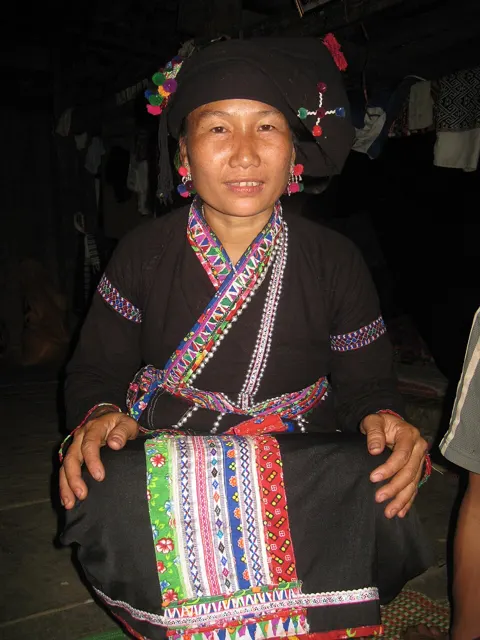
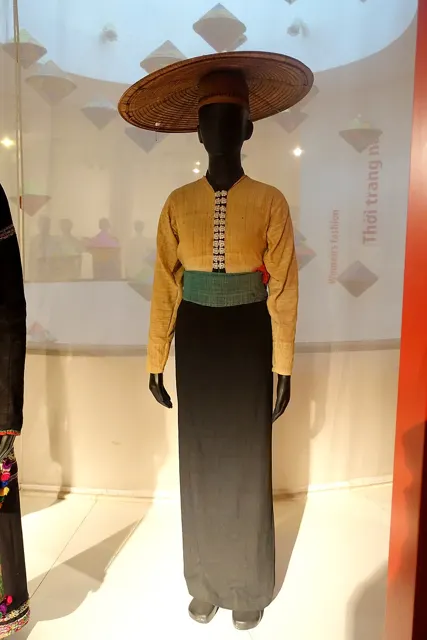
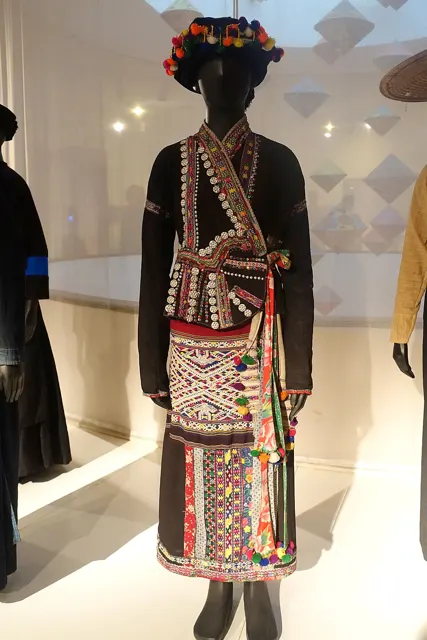
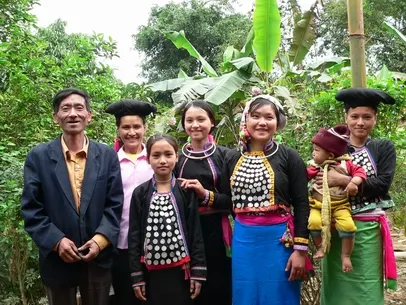
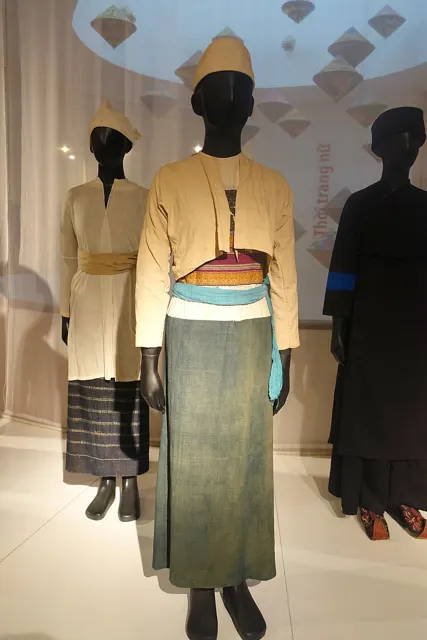
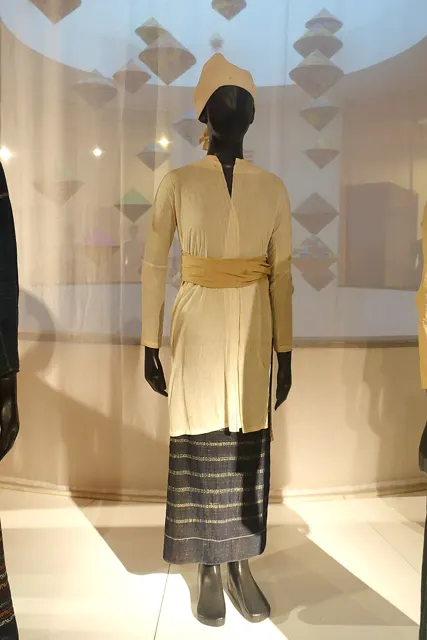
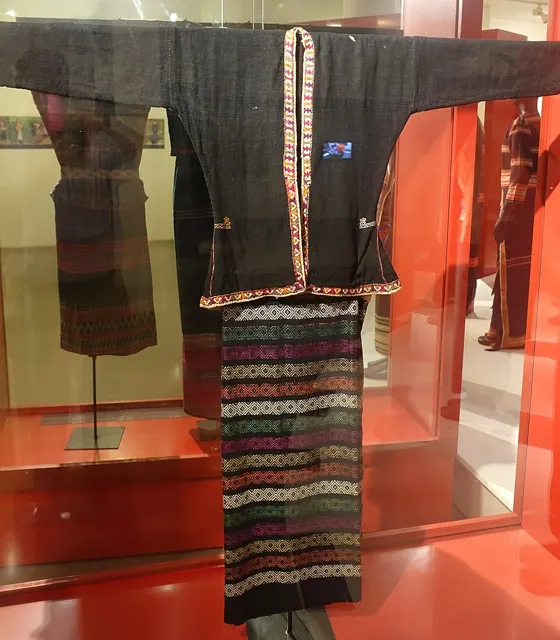
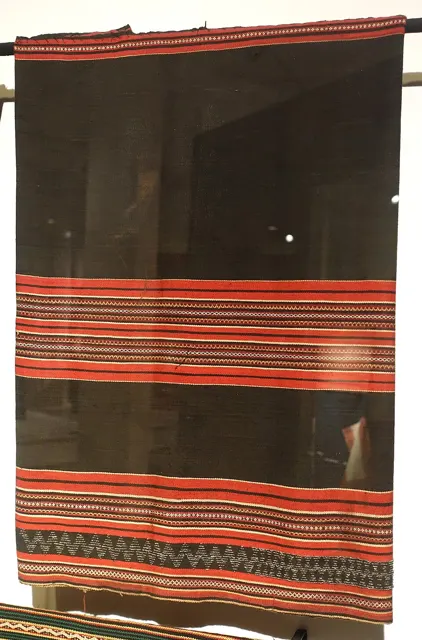
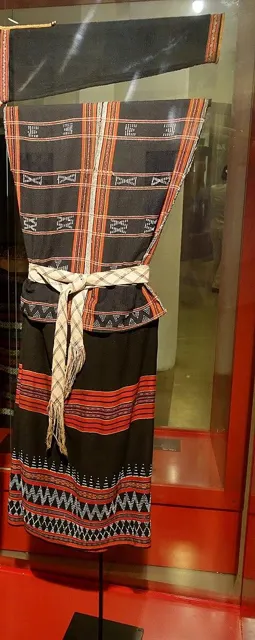
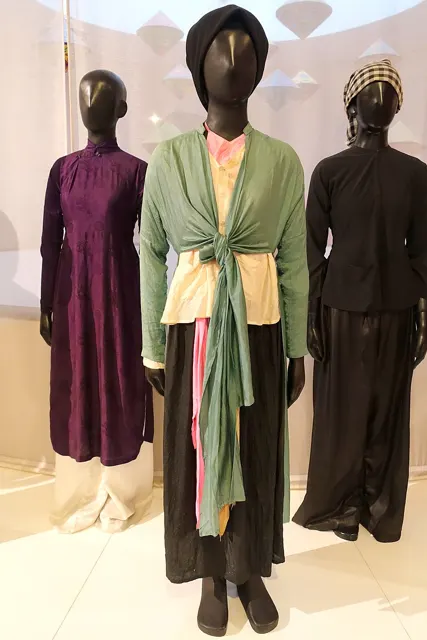
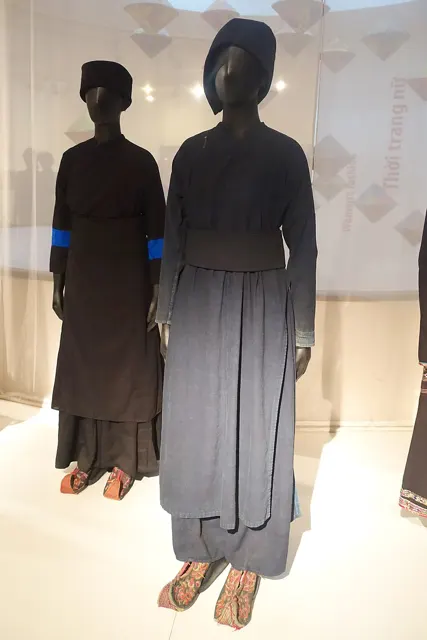
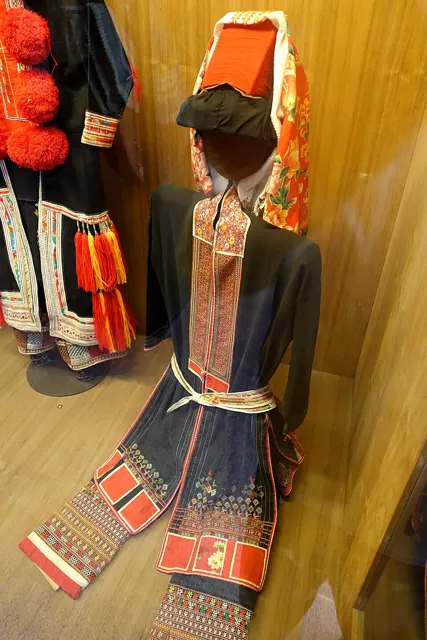
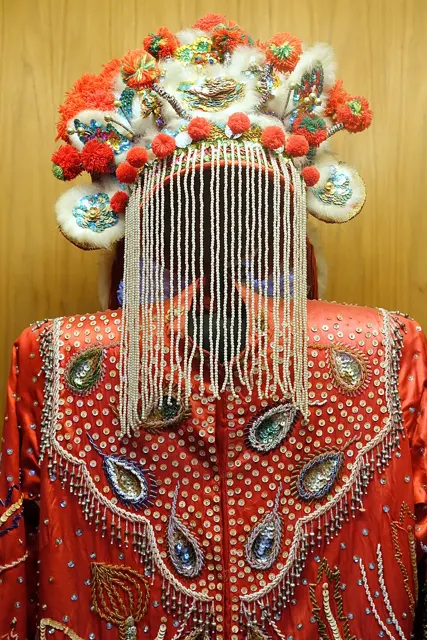
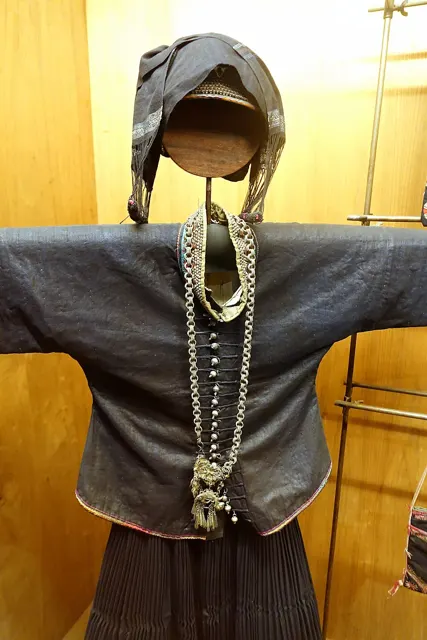
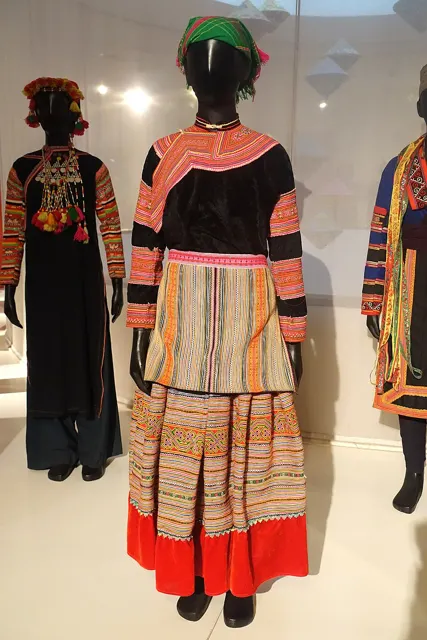
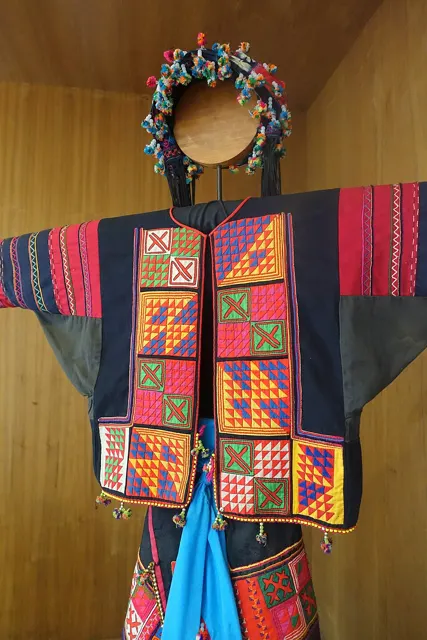
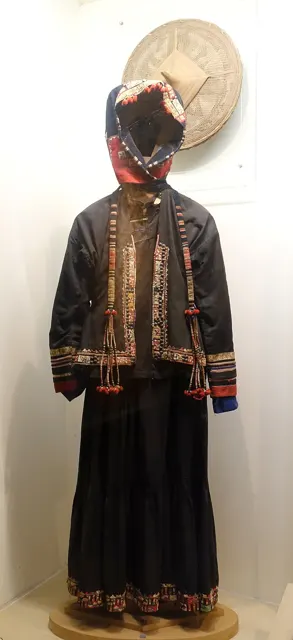
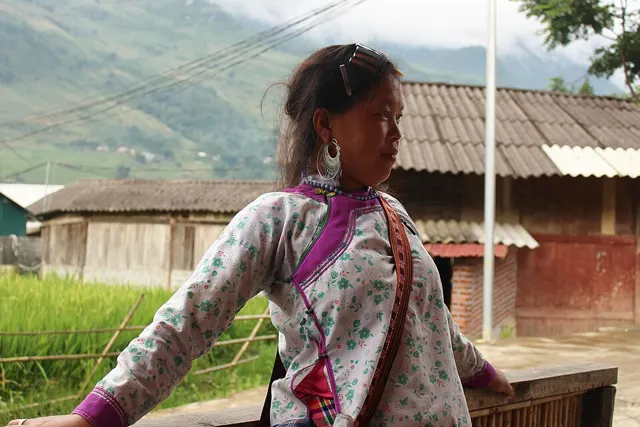
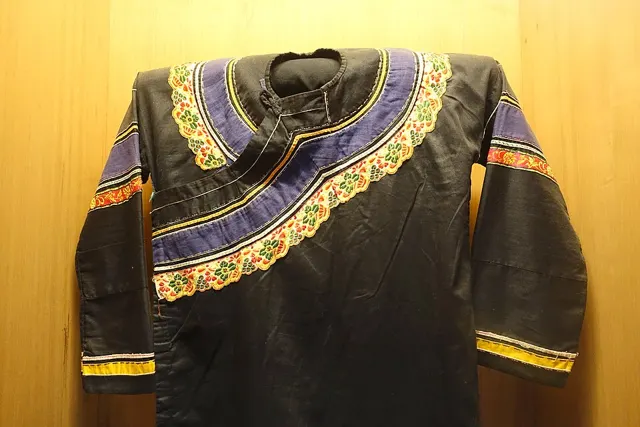
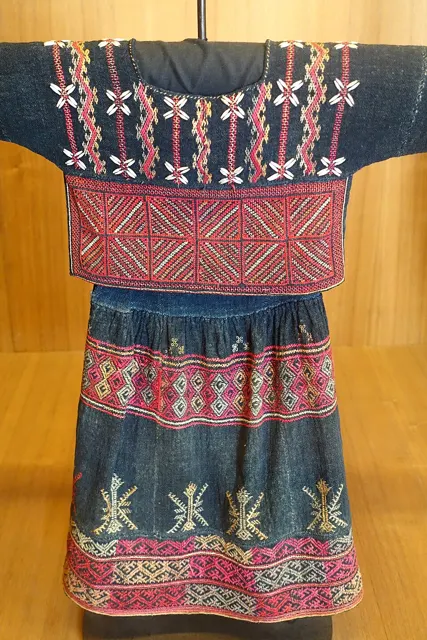
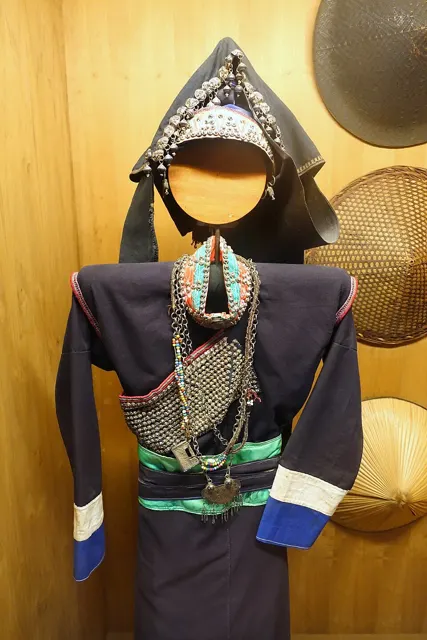
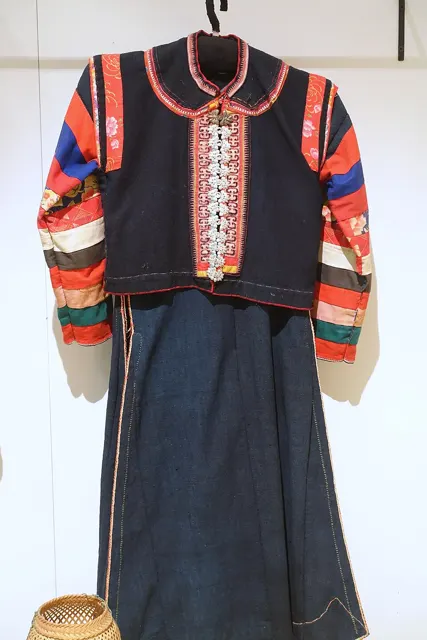
In the order you meet them. Most of the pictures show costumes in the Vietnam Museum of Ethnology, the Vietnamese Women's Museum and the Vietnam National Museum of Fine Arts in Hà Nội. They show the traditional or festival form, and what people wear day to day is usually simpler.
The coast, the north-east and the Hà Giang loop (Days 1–16)
Lào Cai and Sa Pa (Days 17–21)
Lai Châu, Điện Biên, Sơn La and the Thanh Hóa–Nghệ An hills (Days 22–36)