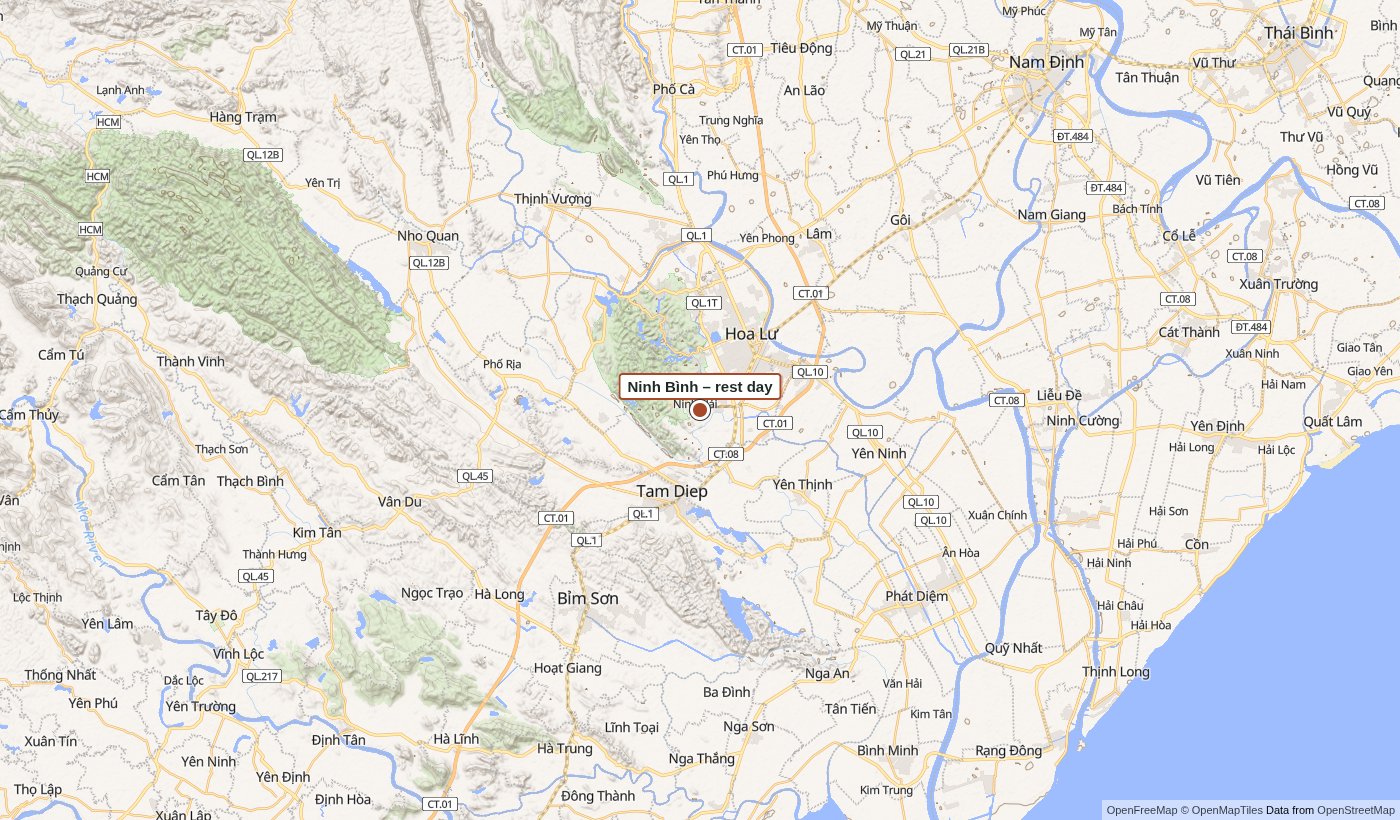
Setting
This is a drowned karst landscape: limestone towers rising from flooded valleys, rivers that run straight through caves, and rice fields between the peaks.
Story
Hoa Lư was the capital of independent Vietnam (Đại Cồ Việt) from 968 to 1010. Đinh Tiên Hoàng chose it after defeating the “twelve warlords”, because the ring of karst made a natural fortress. The Early Lê dynasty and the first Lý king ruled here until the capital moved to Thăng Long (Hà Nội) in 1010. In 2014 UNESCO inscribed the Tràng An Landscape Complex, which includes Hoa Lư, Tràng An, Tam Cốc and Bích Động and the Hoa Lư forest. It was Vietnam’s first mixed cultural and natural World Heritage Site, and the first in Southeast Asia.
People
Kinh, with Mường in the western hills.
Population and livelihoods
Tourism is now a major employer in Ninh Bình. In 2025 the province received about 19.4 million visitors, 2.2 million of them from abroad, and earned more than VND 21,000 billion (roughly €700 million) from tourism. Around Tràng An and Tam Cốc many families have moved from rice farming to rowing boats, running homestays and restaurants, and serving the local speciality, mountain goat. The rice harvest that colours Tam Cốc is still grown, partly now for the visitors.
What makes it special
Tràng An is listed for its culture, its scenery and its geology at the same time. Archaeologists have also found evidence of human occupation in its caves going back tens of thousands of years. A rowing-boat trip through the cave-tunnels at Tràng An is the classic rest-day outing.
The peoples in more detail
Along the way: Kinh; Mường in the nearby hills.
Kinh (Việt)
The majority people, about 85% of the country. In the mountain towns most shopkeepers and officials are Kinh.
Food: Wet rice is the foundation of everything.
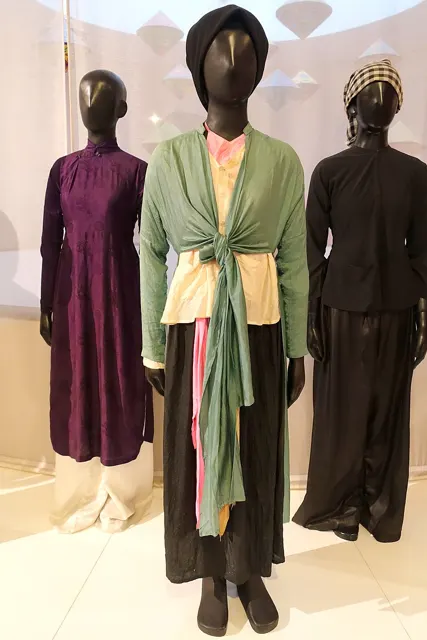
Dress: Traditional village dress is now rarely seen. In the north men once wore loose trousers and a brown shirt, and women a black skirt, a yếm bodice, a brown blouse and a black headscarf folded to a point. For festivals men put on white trousers, a black gown and a folded turban. The áo dài, the long tunic over trousers, is what women wear today for Tết, weddings and other special occasions.
Mường
The closest relatives of the Kinh, sharing the same root language. Mai Châu is a mix of Thái and Mường, and Bá Thước is one of the old Mường heartlands.
Food: Steaming is the signature technique: sticky rice, plain rice, greens and fish are all steamed.
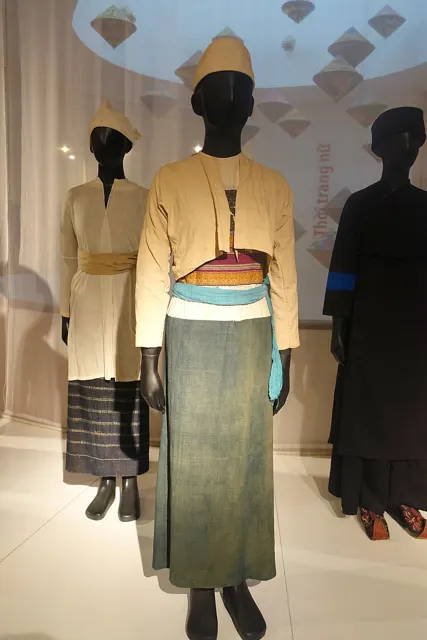
Dress: Mường women's dress is elegant and modest: a plain white rectangular headscarf, a very short blouse, usually white and open at the chest, a bib and an ankle-length skirt. The skirt's waistband is famous for its finely woven patterns. Jewellery includes bracelets, beads and a silver chatelaine of two or four chains hung with a peach-shaped betel box and silver-capped tiger or bear claws.
Military history and figures
Military history
- Hoa Lư. The karst ring made Hoa Lư a natural fortress, which is why Đinh Bộ Lĩnh chose it as his capital after defeating the twelve warlords in 968.
- Song invasion of 981. Lê Hoàn led Đại Cồ Việt’s armies out from Hoa Lư by river against the Song. He defeated the invasion on land and on the Bạch Đằng.
Linked figures
- Đinh Tiên Hoàng (Đinh Bộ Lĩnh, 924–979).
- Lê Hoàn (Lê Đại Hành, 941–1005).
- Lý Công Uẩn (Lý Thái Tổ), who moved the capital from Hoa Lư to Thăng Long in 1010.