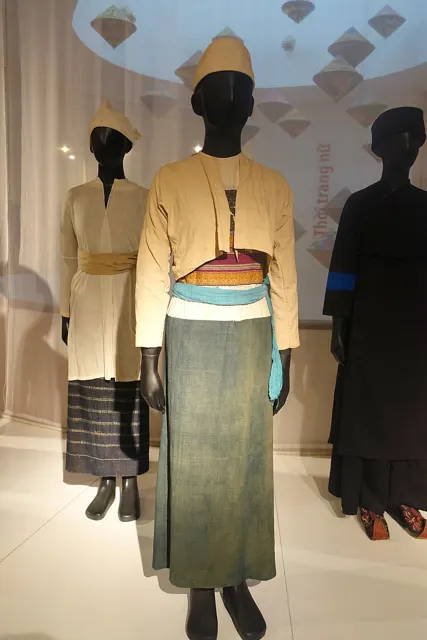
The closest relatives of the Kinh, sharing the same root language. Mai Châu is a mix of Thái and Mường, and Bá Thước is one of the old Mường heartlands. A few Mường also live in Hương Khê, Hà Tĩnh. Women wear a short white blouse and an ankle-length skirt with an elaborately woven waistband.
Dress
Mường women's dress is elegant and modest: a plain white rectangular headscarf, a very short blouse, usually white and open at the chest, a bib and an ankle-length skirt. The skirt's waistband is famous for its finely woven patterns. Jewellery includes bracelets, beads and a silver chatelaine of two or four chains hung with a peach-shaped betel box and silver-capped tiger or bear claws.
Traditions and beliefs
Gongs are at the heart of Mường life, and many families keep a set handed down for generations. At New Year, groups go from house to house beating gongs and singing blessings in the sắc bùa festival. Mo Mường funeral chants and epics are their great oral literature. The Mường New Rice Festival in Ninh Bình province is now national heritage, a nice link to your rest day there.
Food and drink
Steaming is the signature technique: sticky rice, plain rice, greens and fish are all steamed. Rice is also cooked with peanuts in bamboo tubes, and food is often served on banana leaves. Rượu cần, rice wine sipped through long straws from a shared jar, is offered to honoured guests. Women traditionally share one large water pipe between them.
Where you meet them on the Northern Loop
Day 3, Day 4, Day 26, Day 28, Day 29, Day 30, Day 31, Day 32, Day 37