Setting
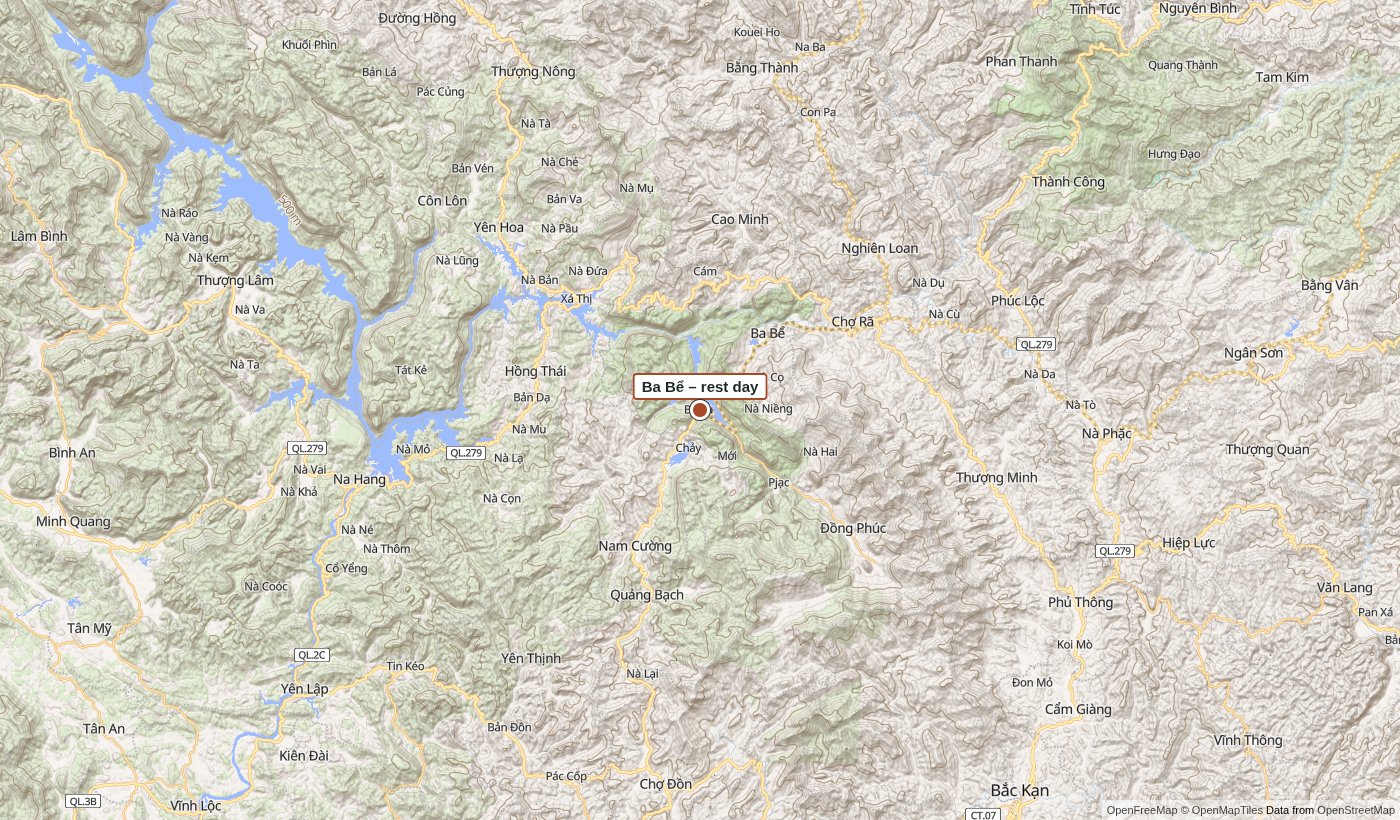
Ba Bể is the largest natural freshwater lake in Vietnam. It is about 8 km long and up to 500 m wide, lies 178 m above sea level and is ringed by limestone forest.
Story
The national park was declared an ASEAN Heritage Park in 2004 and a Ramsar wetland of international importance in 2011. A local Tày legend says the lake was made by a flood sent to punish a village that refused to help a beggar. Only a widow who helped him was spared, on what is now the island of Pò Giá Mải.
People
Tày (the stilt houses at Pác Ngòi) and Dao.
Population and livelihoods
Pác Ngòi is a Tày village of 97 households, and 37 of them run homestays. Before tourism people lived from their rice fields; now boat trips on the lake, cooking for guests and lake fish add to the farm income. Many families still keep fields and livestock alongside the homestay.
What makes it special
By boat you can reach Puông cave, where the river runs through a mountain, and the Đầu Đẳng rapids. You can also stay overnight in a Tày stilt house on the lakeshore.
The peoples in more detail
Along the way: Tày (Pác Ngòi stilt houses), Dao.
Tày (Thổ, old name)
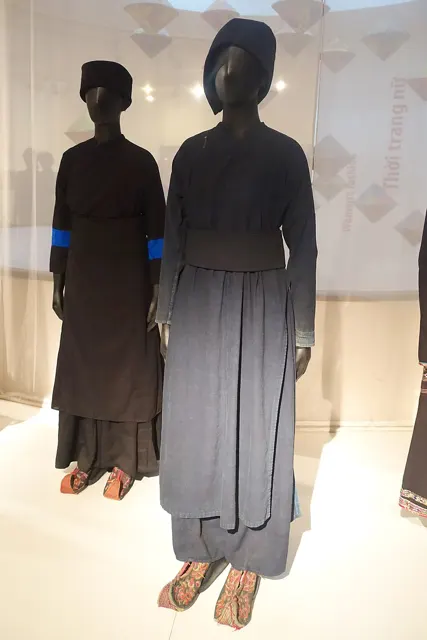
Valley rice farmers who live in timber stilt houses and wear plain indigo-dyed clothes. They are the majority in Bình Liêu and have lived around Ba Bể for about 2,000 years; Pác Ngòi is a Tày village.
Food: Sticky rice was once the staple, and most homes still have a steamer for it.
Dress: Plain clothes of home-woven cotton, dyed indigo and almost never embroidered. Women wear a short blouse under a long tunic, with a skirt or trousers. The local sub-groups differ in detail: the Ngạn wear a slightly shorter tunic, the Phén wear brown, the Thu Lao wind their headscarf into a point on top of the head, and the Thổ dress like the Thái of Mai Châu.
Dao (Yao, Mien)
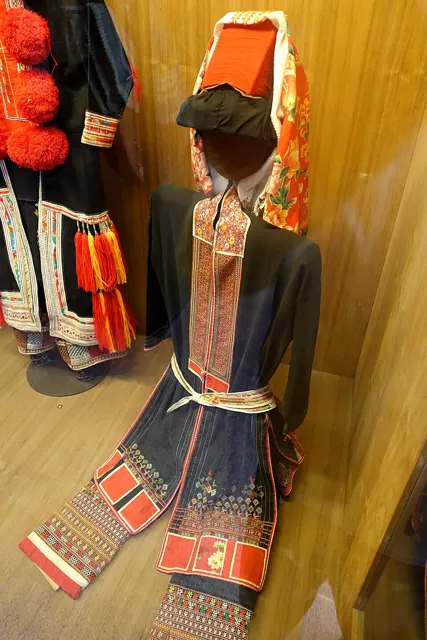
A large group with many branches, each with its own dress. In Bình Liêu you'll see Dao Thanh Y and Dao Thanh Phán, around Ba Bể the Dao live on the hillsides, at Bắc Hà market Black Dao come in, and in Sa Pa and Hoàng Su Phì there are Red Dao, with red pom-pom headdresses.
Food: Two main meals a day, of rice or, in some places, maize or rice porridge.
Dress: Dress varies more than in any other group, and each branch ties its headscarf in its own way. Red Dao women wind their hair up under the headscarf on top of the head. Their tunic has a brightly embroidered collar, and the bib carries eight-petalled flowers worked in silver. Women embroider from memory rather than from a drawn pattern, stitching on the back of the cloth so the design stands out on the front. They also print patterns in hot beeswax before dyeing, which leaves pale blue motifs on the indigo. Dao silversmiths make the neck rings, bracelets, anklets, earrings and betel boxes.
Military history and figures
Military history
There are no major battles at the lake itself. The surrounding Bắc Kạn–Thái Nguyên–Tuyên Quang hills formed the Việt Bắc “safe zone” (ATK) from which the Việt Minh government ran the war in 1947–54, and the Léa operation of 1947 swept the area.
Linked figures
None specific to the lake. The Việt Bắc leadership as a whole (Hồ Chí Minh, Trường Chinh, Phạm Văn Đồng, Giáp) is linked to the region.