Setting
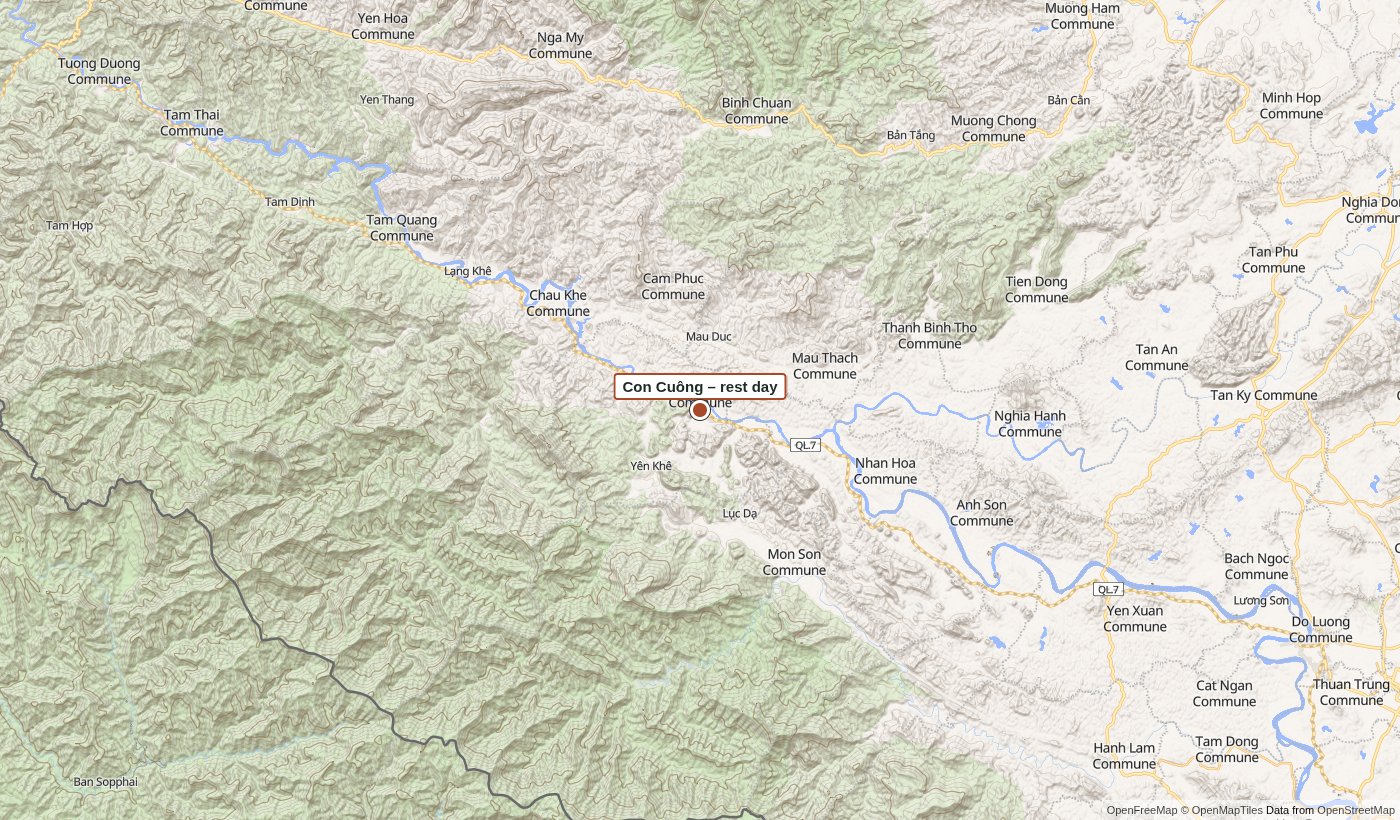
Pù Mát National Park covers about 94,800 ha across Tương Dương, Con Cuông and Anh Sơn, rising to the Lao border. It is the core of the Western Nghệ An Biosphere Reserve, which UNESCO recognised in 2007.
Story
The Đan Lai live inside the park along the Khe Choăng stream. They are a small community said to have fled into the forest generations ago, and are officially counted as Thổ.
People
Thái; Đan Lai (officially Thổ) inside Pù Mát.
Population and livelihoods
About 111 villages with some 93,500 people live in Pù Mát’s buffer zone. Almost all of them farm, and many have depended on the forest. For the Thái and the Đan Lai, livestock (cattle, buffalo, pigs and poultry) is now the main source of income and safety net, as hunting and logging in the park are banned. Community tourism at Khe Kèm and on the Giăng river is a small but growing income.
What makes it special
Khe Kèm waterfall and the forest trails make an easy rest day in one of the largest areas of lowland forest left in Indochina.
The peoples in more detail
Along the way: Thái; Đan Lai (officially Thổ) inside Pù Mát.
Thái (Tai Dam, Tai Don)
This is the people of the Days 16–24 valleys. Black Thái live around Sơn La and Điện Biên, and White Thái around Mai Châu.
Food: Sticky rice steamed in a wooden steamer is the traditional staple, though plain rice is now the everyday grain.
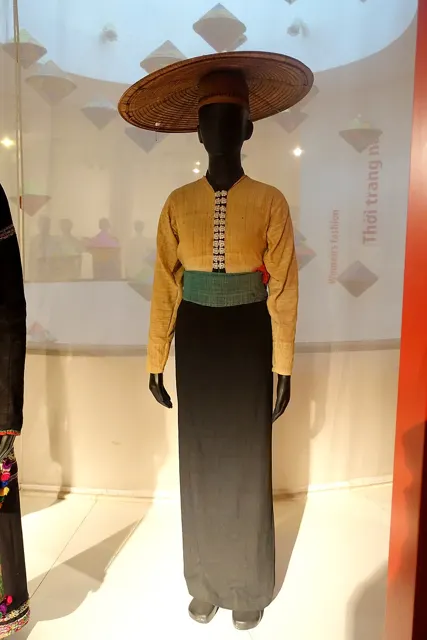
Dress: Thái women wear a short, close-fitting blouse in many colours, fastened down the front with silver buttons shaped like butterflies, spiders or cicadas. With it go a dark tubular skirt, a green silk sash at the waist and a silver chatelaine at the hip. For festivals they add a long black tunic. Black Thái women are known for the khăn piêu headscarf, embroidered in bright colours.
Thổ
A Vietic people of the Thanh Hóa and Nghệ An hills. The main Thổ districts, such as Quỳ Hợp and Nghĩa Đàn, lie a little south-east of your Days 21–22 route.
Food: Once sticky rice, now mostly plain rice.
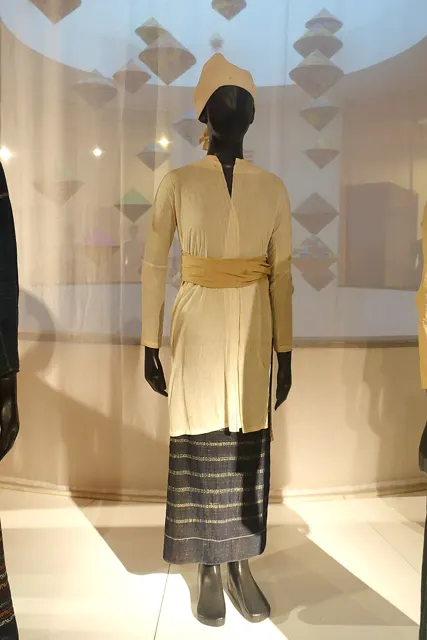
Dress: Men dress like the Kinh, in white trousers, a long black gown and a purple crepe turban. Around Lâm La women wear black cotton skirts with two coloured lines from waist to hem and a brown or white five-panel blouse; around Quỳ Hợp they buy or trade their skirts from the Thái. Among the Thổ, as among the Mường, a white headscarf is everyday wear, not a sign of mourning.
Military history and figures
This area is covered on Day 34.
Practical notes
- Rest day at Con Cuông (Pù Mát National Park, Khe Kèm waterfall).