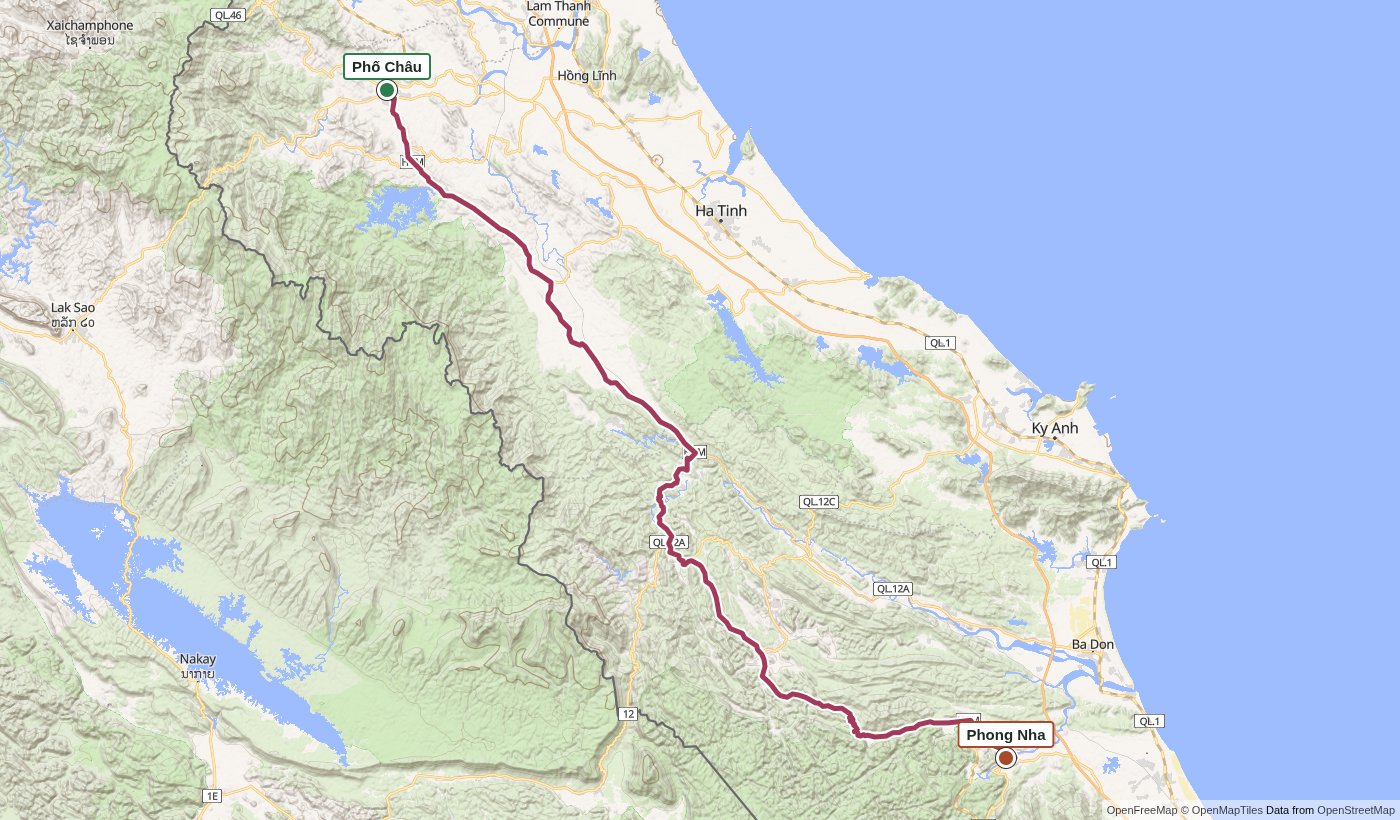
Setting
The road follows the Hồ Chí Minh road south along the edge of the Annamites through Hương Khê and Tuyên Hóa into Phong Nha. There are forested hills on the right and the Ngàn Sâu valley on the left.
Story
The modern Hồ Chí Minh road runs 3,167 km from Cao Bằng to Cà Mau through 30 provinces. Quảng Bình has the longest section, 320 km across its two branches. In the war Quảng Bình was one of the main starting points of the Trường Sơn road (Route 559), which carried supplies south.
People
Kinh, Mường and Chứt (Hương Khê). The Chứt is a small group made up of the Sách, Rục, Mày, Mã Liềng and Arem. A Mã Liềng community was found in the forest in 1969 and resettled at Rào Tre by the border guards.
Population and livelihoods
Phong Nha town (now a commune) has about 12,500 people, including one Bru-Vân Kiều village. Most people used to live from farming and the forest. Now hotels, homestays, restaurants, boat services and cave guiding are the main living. Since 2025 the area has been part of the merged Quảng Trị province, with about 1.87 million people.
What makes it special
You reach Phong Nha and the karst rises beside the road.
The peoples in more detail
Along the way: Kinh, Mường, Chứt (Hương Khê).
Kinh (Việt)
The majority people, about 85% of the country. In the mountain towns most shopkeepers and officials are Kinh.
Food: Wet rice is the foundation of everything.
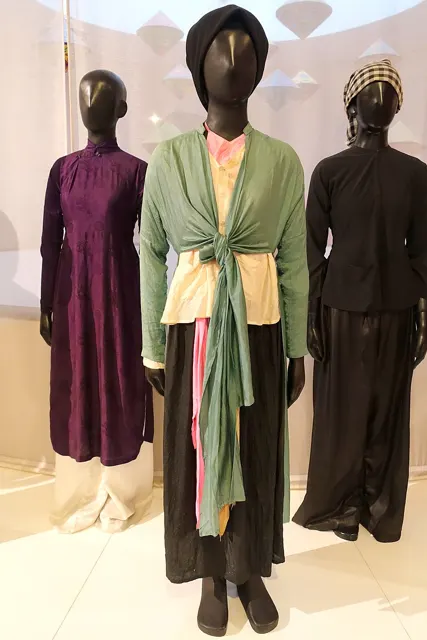
Dress: Traditional village dress is now rarely seen. In the north men once wore loose trousers and a brown shirt, and women a black skirt, a yếm bodice, a brown blouse and a black headscarf folded to a point. For festivals men put on white trousers, a black gown and a folded turban. The áo dài, the long tunic over trousers, is what women wear today for Tết, weddings and other special occasions.
Mường
The closest relatives of the Kinh, sharing the same root language. Mai Châu is a mix of Thái and Mường, and Bá Thước is one of the old Mường heartlands.
Food: Steaming is the signature technique: sticky rice, plain rice, greens and fish are all steamed.
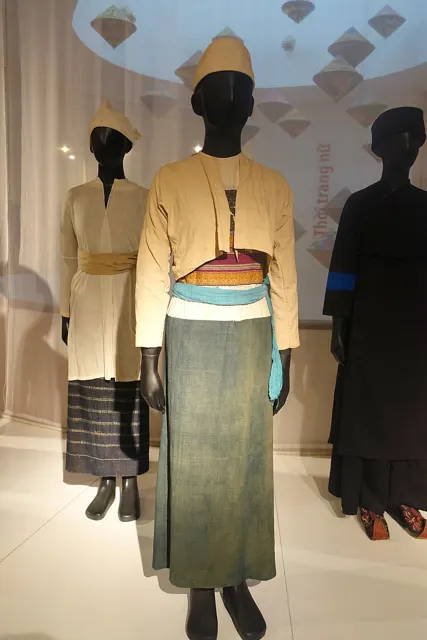
Dress: Mường women's dress is elegant and modest: a plain white rectangular headscarf, a very short blouse, usually white and open at the chest, a bib and an ankle-length skirt. The skirt's waistband is famous for its finely woven patterns. Jewellery includes bracelets, beads and a silver chatelaine of two or four chains hung with a peach-shaped betel box and silver-capped tiger or bear claws.
Chứt (Sách, Mày, Rục, Arem, Mã Liềng)
A small group made up of several sub-groups, living in the limestone forests of Quảng Bình. The Rục and Arem lived mainly in caves and rock shelters until the mid-twentieth century.
Food: Maize and cassava.
Dress: The Chứt never wove cloth. They bought or bartered it from the Kinh and Lao along the border. Women wore skirts, and in winter people wore jackets made of bark. Today they dress like the Kinh.
Military history and figures
Military history
- Hương Khê rising, 1885–96. The Hương Sơn–Hương Khê valley was the base of the longest and best organised Cần Vương rising. Its men made their own rifles, copied from French models.
- Ngã ba Đồng Lộc. The road passes the junction on or near the Hồ Chí Minh road. On 24 July 1968 ten young volunteer women, led by Võ Thị Tần, were killed by a bomb while keeping it open.
Linked figures
- Phan Đình Phùng (1847–1895), leader of the Hương Khê rising.
- Cao Thắng (1864–1893), the rising’s general and armourer.
- The ten women of Đồng Lộc.