Setting
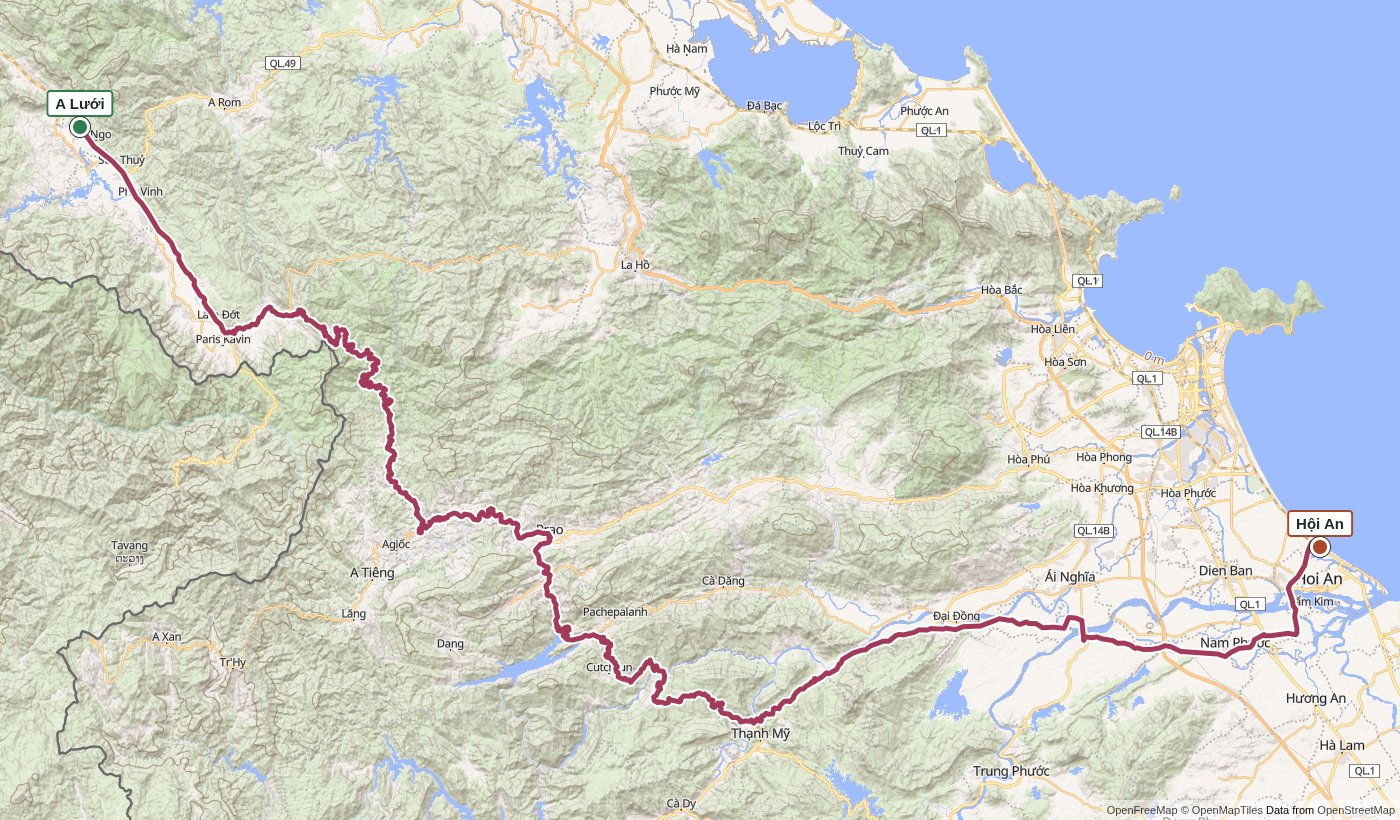
You come down from the A Lưới valley to the coast near Huế, then go over or through Hải Vân, along the Đà Nẵng coast and home to Hội An.
Story
Hội An Ancient Town was inscribed by UNESCO in 1999. It is an exceptionally well-preserved South-East Asian trading port from the 15th to the 19th centuries, used by Japanese, Chinese and European merchants. Long before them, the Sa Huỳnh and then the Cham traded along the Thu Bồn river.
People
Tà Ôi and Cơ Tu, then Kinh towards Hội An.
Population and livelihoods
Hội An has about 120,000 residents and received about 4.4 million visitors in 2024, around 37 visitors per resident. Tourism, tailoring, crafts and restaurants dominate the town; fishing and vegetable growing at Trà Quế and Cẩm Thanh carry on at the edges. Since July 2025 Hội An has been part of the enlarged city of Đà Nẵng, with about 3.07 million people. On the way down from A Lưới, the road passes from acacia plantations and Cơ Tu villages to the rice plain of Đại Lộc and Điện Bàn.
What makes it special
The tour ends where it began. After six weeks of borders, Hội An is a reminder that Vietnam has always been a place of trade and encounter as well as defence.
The peoples in more detail
Along the way: Tà Ôi, Cơ Tu, then Kinh towards Hội An.
Tà Ôi (including the Pa Kô and Pa Hy)
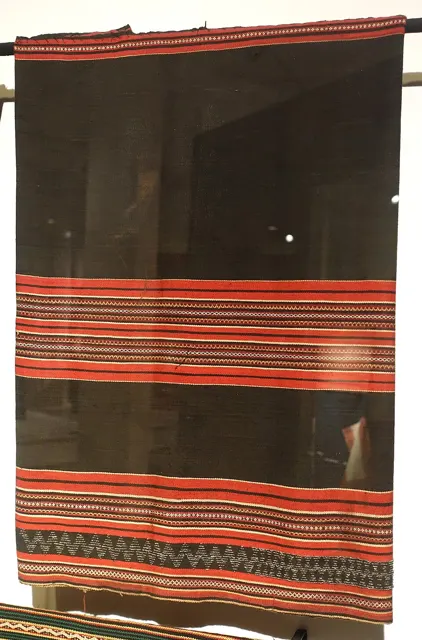
The main people of the A Lưới valley. Their zèng weaving, with beads worked into the cloth, is a recognised national heritage craft.
Food: Rice, topped up with maize, cassava and wild yams.
Dress: Women wear a short tube skirt with a blouse or, near the border in A Lưới, a long skirt that covers them from the chest down. Men wore a loincloth and often went bare-chested. Their weaving, decorated with lead and white beads, is prized by neighbouring groups. Ornaments are of brass, silver, beads or agate, and women wear coils of brass wire around the calves and forearms. Tooth filing, tattooing and stretched earlobes now survive only among the very old.
Cơ Tu (Katu)
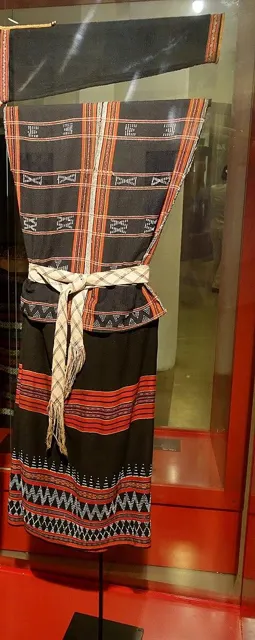
The group closest to home, in the hills west of Hội An and Đà Nẵng; about three-quarters of all Cơ Tu live in Quảng Nam. They are known for the tall carved gươl communal house at the centre of each village and for wood carving.
Food: Plain rice day to day, sticky rice at festivals, traditionally eaten with the hands.
Dress: Their cloth is woven on a black ground with patterns in lead and in white beads. Men wear a loincloth and often go bare-chested. Women wear a tube skirt: a long one covers them from the chest down, while with a short one they wear a sleeveless top, adding a plain white belt for festivals. Large woven cloths serve as wraps and blankets.
Kinh (Việt)
The majority people, about 85% of the country. In the mountain towns most shopkeepers and officials are Kinh.
Food: Wet rice is the foundation of everything.
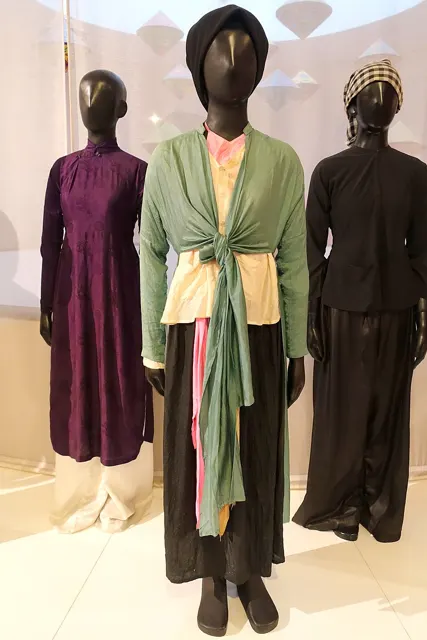
Dress: Traditional village dress is now rarely seen. In the north men once wore loose trousers and a brown shirt, and women a black skirt, a yếm bodice, a brown blouse and a black headscarf folded to a point. For festivals men put on white trousers, a black gown and a folded turban. The áo dài, the long tunic over trousers, is what women wear today for Tết, weddings and other special occasions.
Military history and figures
Military history
- Đà Nẵng, 1858. On 1 September 1858 a Franco-Spanish fleet under Admiral Rigault de Genouilly attacked Đà Nẵng. It was the start of the French conquest, although the landing force was stalled by disease and resistance for months.
- Hải Vân. Hải Vân and Huế are covered on Day 1.
Linked figures
- Nguyễn Tri Phương (1800–1873), who led the defence of Đà Nẵng in 1858.
- Rigault de Genouilly.