Setting
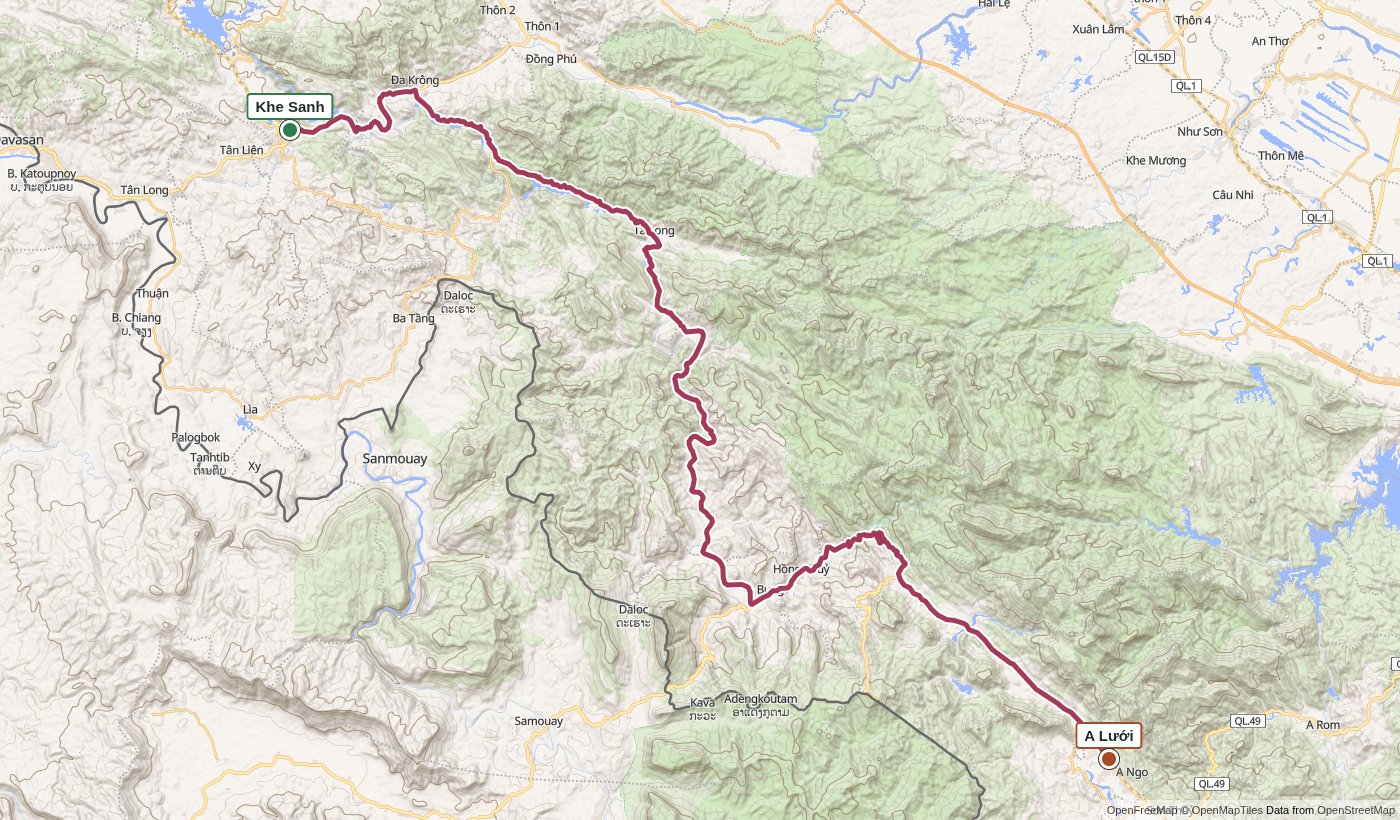
You go down Route 9 to the Đakrông bridge, the start of QL14, then follow the Đakrông river south past Tà Rụt and La Lay into the long A Lưới (A Sầu) valley.
Story
About 20 km east of Đakrông is Tân Sở, the citadel built in 1883 as a refuge for the court. On 13 July 1885 the young emperor Hàm Nghi issued the Cần Vương edict here, calling the people to resist France. From 10 to 20 May 1969 US forces fought for Hill 937, A Bia, above the A Sầu valley. The American press called it “Hamburger Hill”, and there is now a small museum at its foot.
People
Bru-Vân Kiều, Tà Ôi, Pa Kô, Pa Hy and Cơ Tu.
Population and livelihoods
The former A Lưới district had about 54,000 people at the end of 2023, most of them Tà Ôi, Pa Kô, Cơ Tu and Bru-Vân Kiều. In 2024 it left the national list of poor districts, a year early. Farming, acacia and rubber are the main livings. Tà Ôi zèng weaving, a nationally recognised craft, gives a steady income to hundreds of households through cooperatives.
What makes it special
A Lưới is the home of Tà Ôi zèng weaving, which is recognised as national intangible heritage. It is also the end of the tour’s long line of war sites.
The peoples in more detail
Along the way: Bru-Vân Kiều, Tà Ôi, Pa Kô, Pa Hy, Cơ Tu.
Bru-Vân Kiều (Vân Kiều, Trì, Khùa, Ma Coong)
Hill farmers on both sides of the old Hồ Chí Minh Trail, many of whom now grow coffee around Khe Sanh. The Ma Coong of Thượng Trạch hold a well-known drum festival.
Food: They love grilled food and soups of greens cooked with rice and fish or frogs.
Dress: By custom men wore a loincloth and women a skirt with a sleeveless pullover top. Bark fibre was once used for clothing. The Bru-Vân Kiều did not weave, but for festivals women had a full outfit of skirt and long-sleeved tunic bought from across the Lao border. Neck rings, bracelets and earrings are the usual ornaments. Girls once wore their hair in a bun to the left, and married women on top of the head. Most people now dress like the Kinh, though women still wear the skirt.
Tà Ôi (including the Pa Kô and Pa Hy)
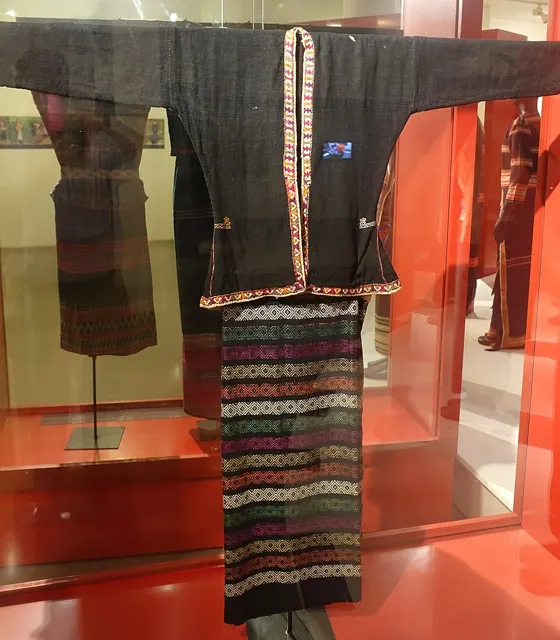
The main people of the A Lưới valley. Their zèng weaving, with beads worked into the cloth, is a recognised national heritage craft.
Food: Rice, topped up with maize, cassava and wild yams.
Dress: Women wear a short tube skirt with a blouse or, near the border in A Lưới, a long skirt that covers them from the chest down. Men wore a loincloth and often went bare-chested. Their weaving, decorated with lead and white beads, is prized by neighbouring groups. Ornaments are of brass, silver, beads or agate, and women wear coils of brass wire around the calves and forearms. Tooth filing, tattooing and stretched earlobes now survive only among the very old.
Cơ Tu (Katu)
The group closest to home, in the hills west of Hội An and Đà Nẵng; about three-quarters of all Cơ Tu live in Quảng Nam. They are known for the tall carved gươl communal house at the centre of each village and for wood carving.
Food: Plain rice day to day, sticky rice at festivals, traditionally eaten with the hands.
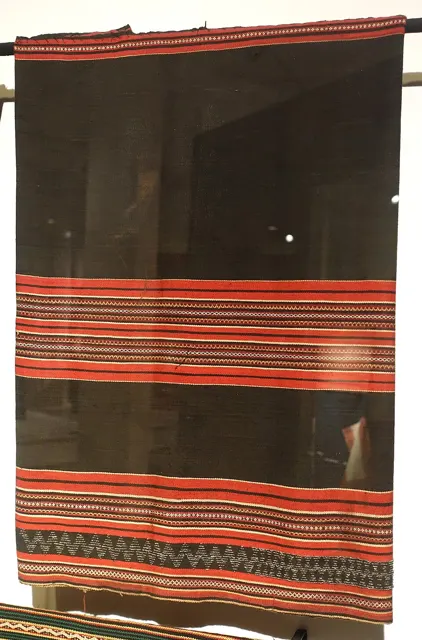
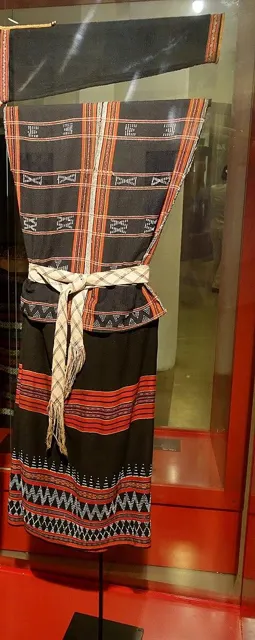
Dress: Their cloth is woven on a black ground with patterns in lead and in white beads. Men wear a loincloth and often go bare-chested. Women wear a tube skirt: a long one covers them from the chest down, while with a short one they wear a sleeveless top, adding a plain white belt for festivals. Large woven cloths serve as wraps and blankets.
Military history and figures
Military history
- Tân Sở, 1885. Tân Sở, near Cam Lộ, was the mountain base to which the regent Tôn Thất Thuyết took the boy emperor Hàm Nghi after the failed attack on the French in Huế. There, on 13 July 1885, the Cần Vương edict was issued.
- Đakrông and the A Lưới valley. The valley (A Shau) was a main trail entry point. Battles included the fall of the A Shau Special Forces camp (8–10 March 1966) and Hamburger Hill (A Bia, 10–20 May 1969).
Linked figures
- Emperor Hàm Nghi (1871–1943), later exiled to Algeria.
- Tôn Thất Thuyết (1839–1913).