Setting
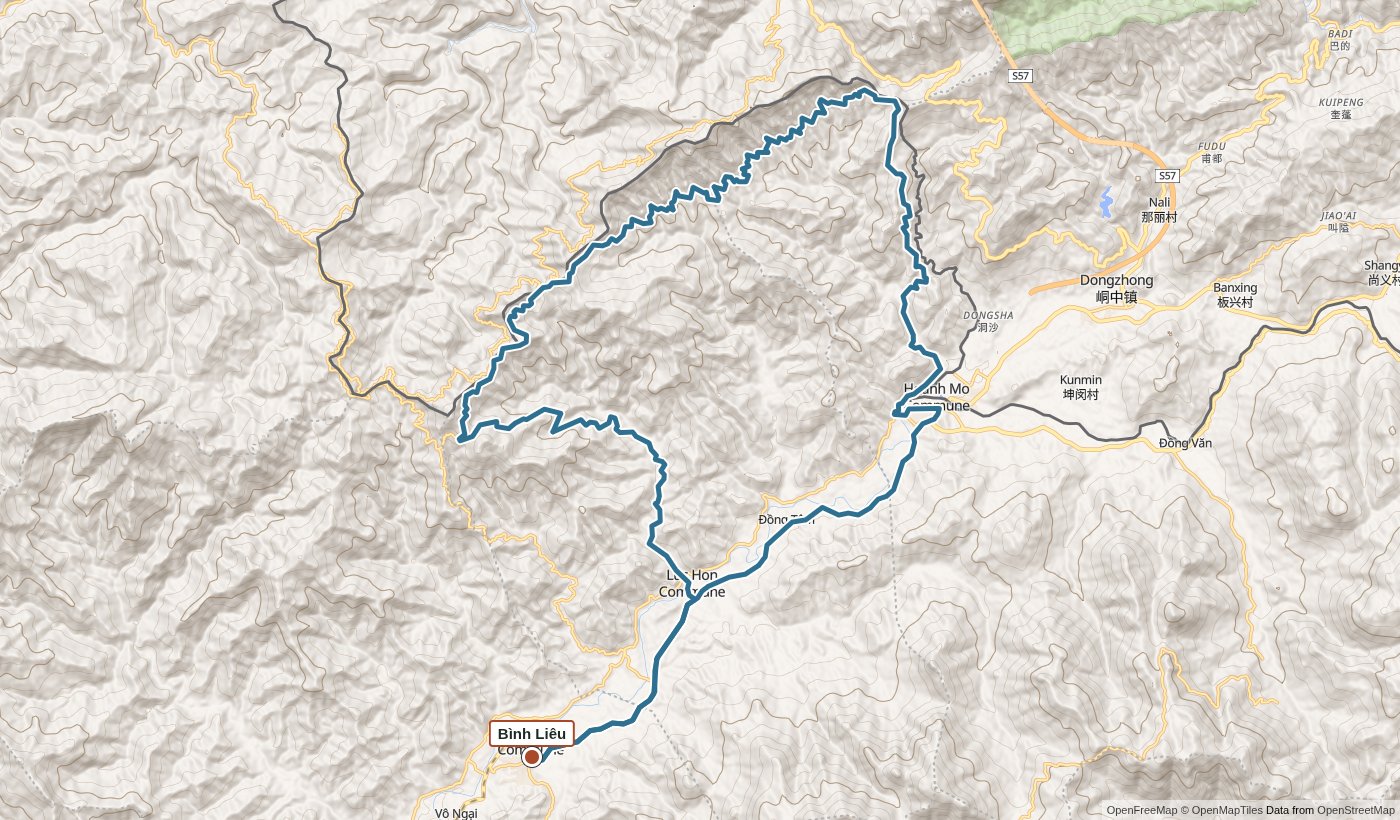
Bình Liêu is a highland district in north-east Quảng Ninh with 43 km of frontier with Guangxi in China, between border markers 1300 and 1327. The border patrol road follows the ridgeline, and much of the year it is above the cloud.
Story
The ridge path to marker 1305, the highest border marker in Quảng Ninh, was “discovered” by backpackers only around 2018–19. The steps along the knife-edge ridge earned it the name “sống lưng khủng long”, the Dinosaur Spine. The markers themselves date from the land-border treaty Vietnam and China signed in 1999 and the demarcation finished in 2008–09.
People
Tày, Dao (Thanh Phán), Sán Chỉ, Hoa and a few Sán Dìu. The weekly market at Đồng Văn commune (not to be confused with Đồng Văn in Hà Giang) brings the communities together.
Population and livelihoods
Bình Liêu’s other living is the border. The Hoành Mô gate, paired with Động Trung on the Chinese side, sits inside a border economic zone set up in 2002. Its trade is mostly imports, about USD 60 million (around €52 million) in the first half of 2024 alone. Border tourism, including day trips to the gate and the ridge walk, is a newer source of income. Most households still farm, raise livestock and harvest star anise and cinnamon from the forest.
What makes it special
Bình Liêu offers a border ridge walk with China on one side and Vietnam on the other, a little-visited market and some of the quietest roads in the north-east. Border guards may stop foreigners, so check locally before setting off.
The peoples in more detail
Along the way: Tày, Dao, Sán Chỉ, Hoa, a few Sán Dìu.
Tày (Thổ, old name)
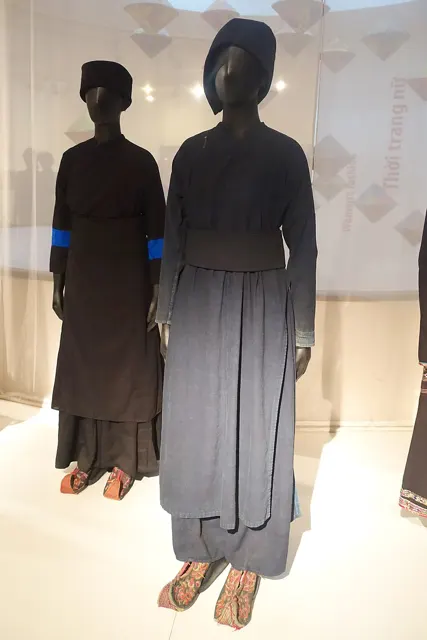
Valley rice farmers who live in timber stilt houses and wear plain indigo-dyed clothes. They are the majority in Bình Liêu and have lived around Ba Bể for about 2,000 years; Pác Ngòi is a Tày village.
Food: Sticky rice was once the staple, and most homes still have a steamer for it.
Dress: Plain clothes of home-woven cotton, dyed indigo and almost never embroidered. Women wear a short blouse under a long tunic, with a skirt or trousers. The local sub-groups differ in detail: the Ngạn wear a slightly shorter tunic, the Phén wear brown, the Thu Lao wind their headscarf into a point on top of the head, and the Thổ dress like the Thái of Mai Châu.
Dao (Yao, Mien)
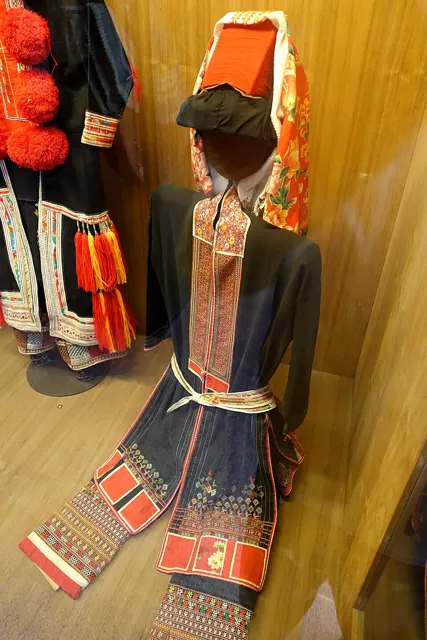
A large group with many branches, each with its own dress. In Bình Liêu you'll see Dao Thanh Y and Dao Thanh Phán, around Ba Bể the Dao live on the hillsides, at Bắc Hà market Black Dao come in, and in Sa Pa and Hoàng Su Phì there are Red Dao, with red pom-pom headdresses.
Food: Two main meals a day, of rice or, in some places, maize or rice porridge.
Dress: Dress varies more than in any other group, and each branch ties its headscarf in its own way. Red Dao women wind their hair up under the headscarf on top of the head. Their tunic has a brightly embroidered collar, and the bib carries eight-petalled flowers worked in silver. Women embroider from memory rather than from a drawn pattern, stitching on the back of the cloth so the design stands out on the front. They also print patterns in hot beeswax before dyeing, which leaves pale blue motifs on the indigo. Dao silversmiths make the neck rings, bracelets, anklets, earrings and betel boxes.
Sán Chỉ (officially part of the Sán Chay)
About 15% of people in Bình Liêu. They live in stilt houses much like their Tày neighbours'.
Food: Mostly plain rice, with plenty of rice wine at festivals.
Dress: A woman's full outfit is an indigo skirt, a long tunic, a bib, a belt and a headscarf. The tunic is decorated on the back and along the opening. The best-known piece is the "mandarin duck" tunic (pù đăn đinh), with patterns across the back.
Hoa (ethnic Chinese)
Small communities of traders and farmers along the Chinese border. Old shophouses with tiled roofs, like those in Đồng Văn's old quarter, show Chinese influence.
Food: Rice, with noodle dishes.
Dress: Traditional dress is now worn mainly by older people and at weddings and funerals. Women wear a high-collared tunic fastened at one side, or a long close-fitting sườn xám slit at the thigh. Girls favour pink, red and other strong colours. Men wear black or dark blue jackets with cloth buttons down one side and a stand-up collar. Women like bracelets of copper, gold, stone or jade, with earrings and necklaces. Men traditionally had gold-capped teeth as an ornament.
Sán Dìu
Mainly lowland and midland farmers in Quảng Ninh and the provinces around Hà Nội. Only a few live in Bình Liêu.
Food:
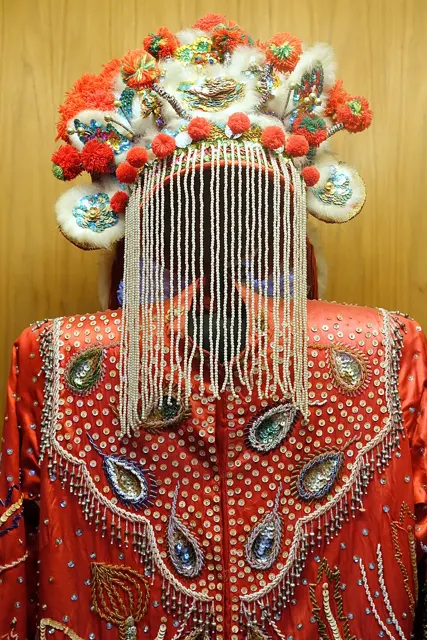
Dress: Women wear a black headscarf and a long tunic. When two tunics are worn, the inner one is always white and the outer indigo one slightly longer. With it go a red bib, a white, pink or pale blue belt, a knee-length indigo skirt made of two panels on one waistband, and leggings. Jewellery is silver: neck rings, bracelets, earrings and a chatelaine chain.
Military history and figures
Military history
- Border markers. The markers you walk past, including marker 1305 on the Dinosaur Spine, are the result of the border settlement that followed decades of tension.
- 1979. In February China attacked along the whole frontier, Quảng Ninh included.
- 1075–76. The Quảng Ninh coast is also where Lý Thường Kiệt launched his pre-emptive strike into Song China. He took Khâm Châu, Liêm Châu and Ung Châu before the Song could invade.
Linked figures
- Lý Thường Kiệt (1019–1105), the Lý general also credited with planting the first flag at Lũng Cú (Day 14).
Practical notes
- Second night at Bình Liêu. North border loop, no luggage.
- Dinosaur Spine walk to marker 1305 (about 2,000 steps). Foreigners may be stopped by border guards: check locally first. Fallback: south loop via Khe Vằn waterfall (about 50 km, no file).
- This track was drawn with a routing service and the road surface has not been checked. Ask locally the evening before.