Setting
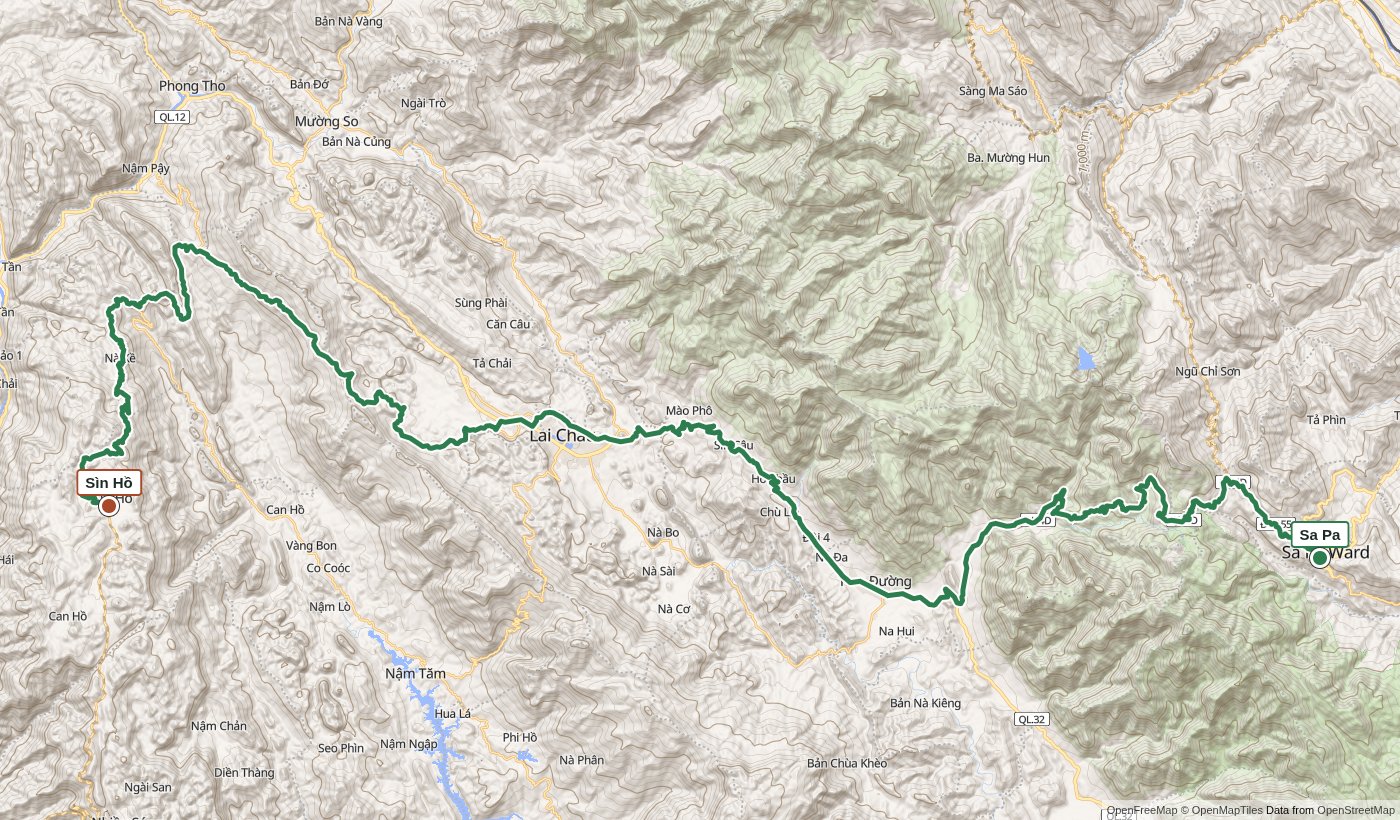
You cross the Hoàng Liên Sơn range over Ô Quy Hồ pass, at about 2,000 m and nearly 50 km long. The road then comes down through Tam Đường and Lai Châu city and climbs again to the Sìn Hồ plateau, at around 1,500 m.
Story
Ô Quy Hồ is the “king of passes” of the north-west. It is a climatic divide: the dry, warm western slope of the Hoàng Liên range faces the cool, damp Sa Pa side. Sìn Hồ is called the “roof of Lai Châu”, and the district borders Yunnan.
People
Lự (at Bản Hon, near Tam Đường), Thái, Hmong and Dao. The Lự are a small Tai-speaking group of Buddhist origin, known for their weaving.
Population and livelihoods
The former Sìn Hồ district had about 84,000 people in 2019 spread over 1,527 km², one of the most thinly populated areas in the north. At about 1,500 m it suits tea, temperate fruit and medicinal plants. At Hồng Thu commune nearly 400 households grow more than 270 ha of Shan Tuyết tea for a factory at Tam Đường. Lai Châu as a whole is a hydropower province: the Lai Châu dam (1,200 MW) and Huội Quảng (560 MW) are among its plants.
What makes it special
This is the highest pass on the tour. The Lự village of Bản Hon is one of the few places in Vietnam to meet this community.
The peoples in more detail
Along the way: Lự (Bản Hon), Thái, Hmong, Dao.
Lự (Lue, Tai Lue)
A small Tai people with Theravada Buddhist roots. They are known for their brocade weaving and swordsmiths.
Food: Sticky rice and plenty of fish, including a sour salad of raw fish.
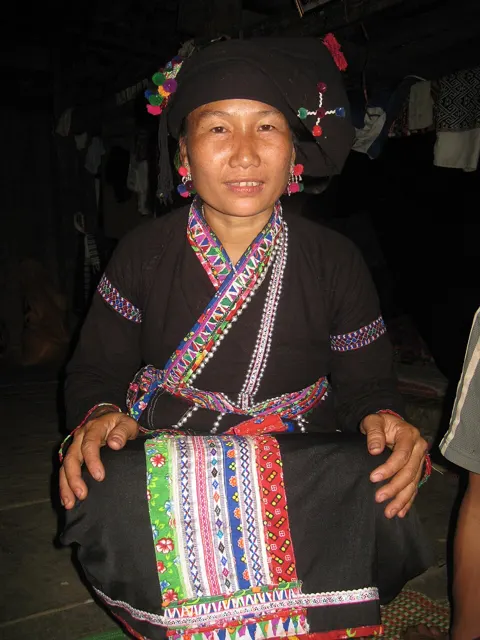
Dress: Women wear an indigo blouse open at the front and a black indigo skirt woven and embroidered in two decorated bands, so it looks two-tiered. The headscarf is wound to tilt to the left, showing an embroidered border at the front. Men wear indigo-black trousers and a jacket open at the front, with plaited cloth buttons, two pockets in the front panels and one on the left breast.
Thái (Tai Dam, Tai Don)
This is the people of the Days 16–24 valleys. Black Thái live around Sơn La and Điện Biên, and White Thái around Mai Châu.
Food: Sticky rice steamed in a wooden steamer is the traditional staple, though plain rice is now the everyday grain.
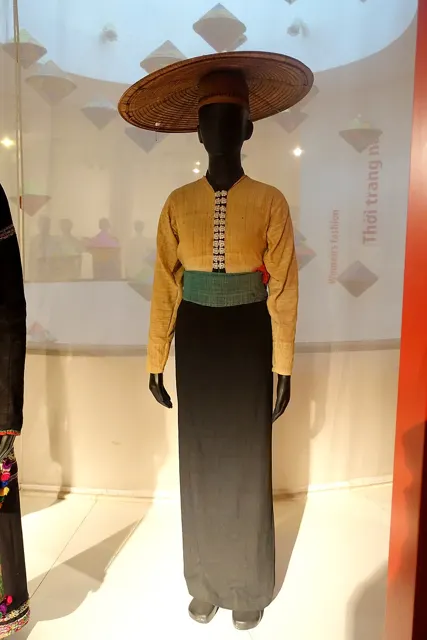
Dress: Thái women wear a short, close-fitting blouse in many colours, fastened down the front with silver buttons shaped like butterflies, spiders or cicadas. With it go a dark tubular skirt, a green silk sash at the waist and a silver chatelaine at the hip. For festivals they add a long black tunic. Black Thái women are known for the khăn piêu headscarf, embroidered in bright colours.
Hmong (H'Mông, Mèo, old name, now avoided)
The people you'll see most in the high country. They make up about 72% of the Đồng Văn plateau and about half of Sa Pa, and Mường Lống is entirely Hmong.
Food: Two meals a day, three at harvest.
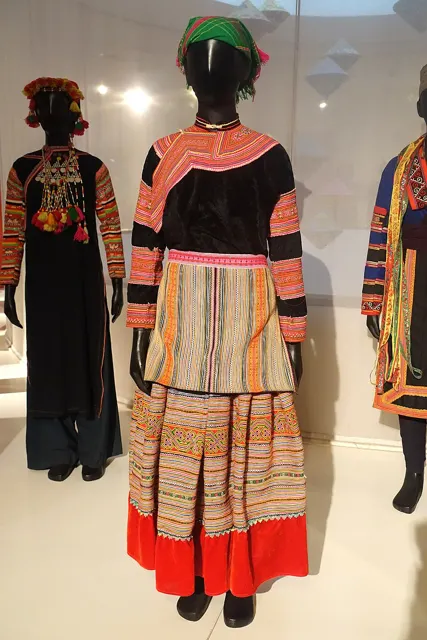
Dress: The most colourful dress in the north, and different for each branch. White Hmong women grow hemp and weave linen, and wear white skirts with an open-fronted blouse embroidered on the sleeves and a panel at the back of the collar. Flower Hmong women, whom you'll see at Bắc Hà, wear indigo skirts embroidered or printed with beeswax batik, with appliqué and embroidery across the shoulders and chest. Black Hmong women around Sa Pa wear indigo skirts patterned with beeswax and an open-fronted blouse. Green Hmong women wear a tubular skirt, and once married wind their hair up with a horseshoe comb under a headscarf shaped like two horns. Decoration is mostly appliqué, with spirals, squares, lozenges and crosses as the common motifs.
Dao (Yao, Mien)
A large group with many branches, each with its own dress. In Bình Liêu you'll see Dao Thanh Y and Dao Thanh Phán, around Ba Bể the Dao live on the hillsides, at Bắc Hà market Black Dao come in, and in Sa Pa and Hoàng Su Phì there are Red Dao, with red pom-pom headdresses.
Food: Two main meals a day, of rice or, in some places, maize or rice porridge.
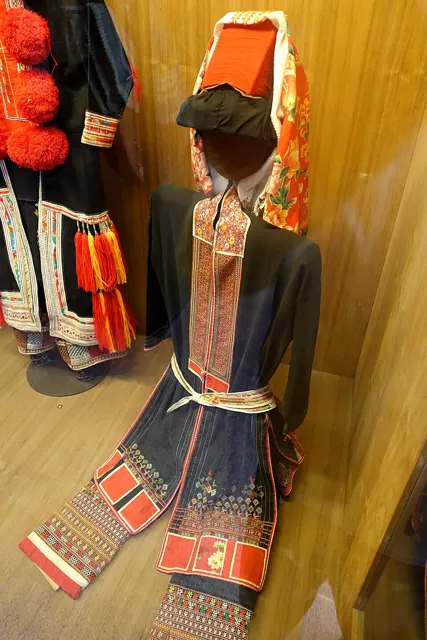
Dress: Dress varies more than in any other group, and each branch ties its headscarf in its own way. Red Dao women wind their hair up under the headscarf on top of the head. Their tunic has a brightly embroidered collar, and the bib carries eight-petalled flowers worked in silver. Women embroider from memory rather than from a drawn pattern, stitching on the back of the cloth so the design stands out on the front. They also print patterns in hot beeswax before dyeing, which leaves pale blue motifs on the indigo. Dao silversmiths make the neck rings, bracelets, anklets, earrings and betel boxes.
Military history and figures
Military history
Lai Châu’s Phong Thổ district, north of today’s road, was another 1979 invasion axis.
Linked figures
None of national note.