Setting
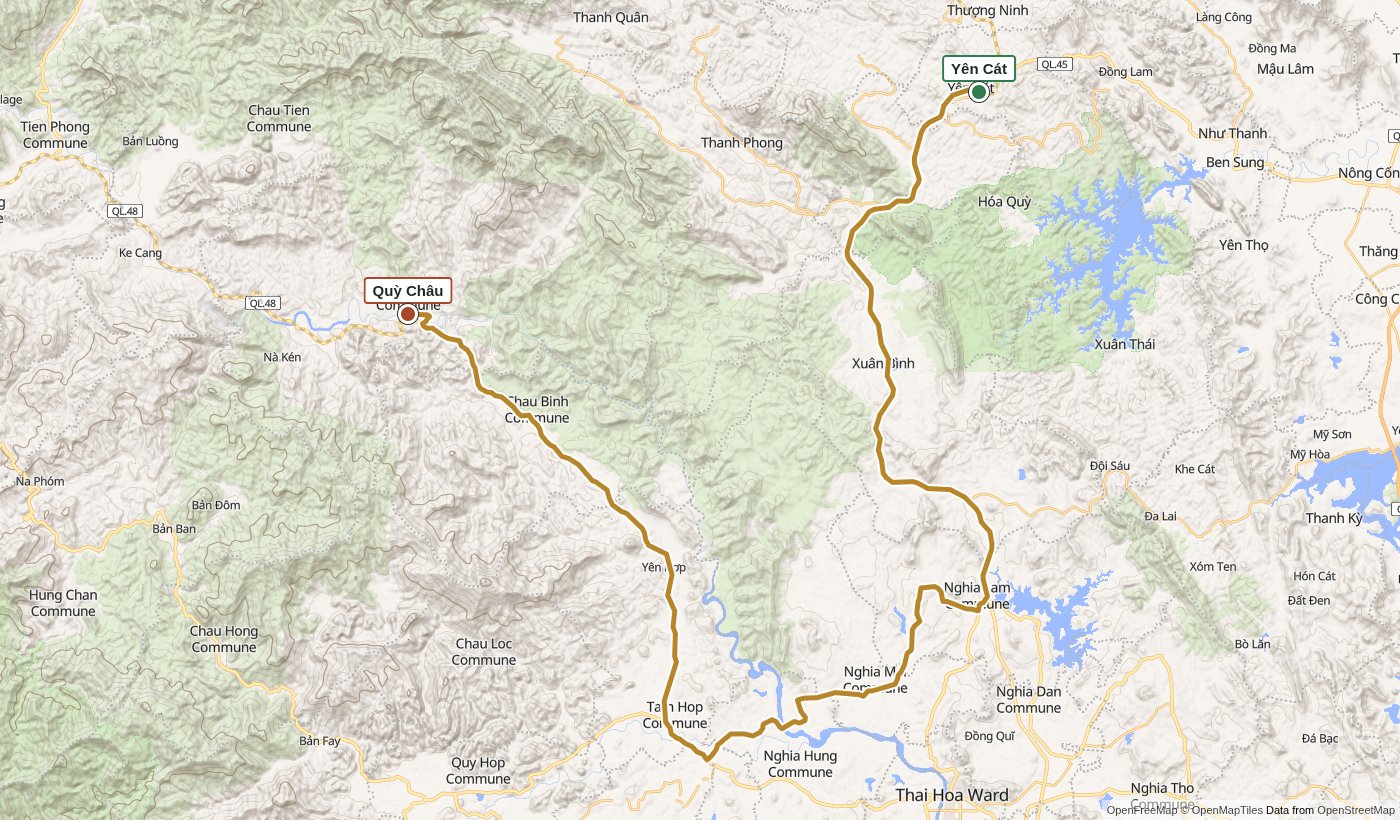
The road crosses from Thanh Hóa into Nghệ An over rolling red-earth country, then follows the Hiếu river valley up into the hills. Quỳ Châu lies about 150 km north-west of Vinh, and Thái villages line the river.
Story
Quỳ Châu is the heart of the old “Phủ Quỳ” cultural belt, the historic upland prefecture of western Nghệ An. The Thái here were governed for centuries by their own hereditary chiefs (tạo mường) under the Vietnamese court.
People
Thổ, Thái and Mường. The Thái make up about 78 per cent of Quỳ Châu’s 60,000 people. The Thổ are a Việt–Mường-speaking people found mainly in western Nghệ An and Thanh Hóa.
Population and livelihoods
Quỳ Châu commune had about 23,000 people at the end of 2024. The area is famous for rubies. When they were found in 1990, a gem rush brought more than 10,000 unofficial miners from all over Vietnam. That boom is long over. Today the living is acacia plantations, farming and livestock, with Thái brocade weaving at Hoa Tiến and incense-making as local crafts.
What makes it special
Quỳ Châu is a little-visited Thái valley: stilt houses, irrigation water wheels and brocade weaving. It is a good moment to explain how the Thái of the far west of Nghệ An differ from the Black and White Thái of the north-west you met a week earlier.
The peoples in more detail
Along the way: Thổ, Thái, Mường.
Thổ
A Vietic people of the Thanh Hóa and Nghệ An hills. The main Thổ districts, such as Quỳ Hợp and Nghĩa Đàn, lie a little south-east of your Days 21–22 route.
Food: Once sticky rice, now mostly plain rice.
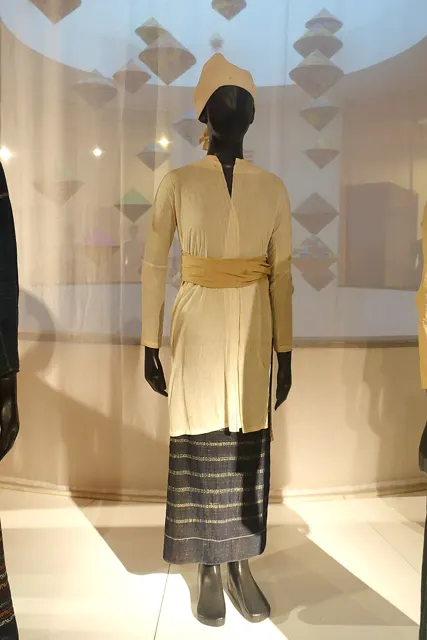
Dress: Men dress like the Kinh, in white trousers, a long black gown and a purple crepe turban. Around Lâm La women wear black cotton skirts with two coloured lines from waist to hem and a brown or white five-panel blouse; around Quỳ Hợp they buy or trade their skirts from the Thái. Among the Thổ, as among the Mường, a white headscarf is everyday wear, not a sign of mourning.
Thái (Tai Dam, Tai Don)
This is the people of the Days 16–24 valleys. Black Thái live around Sơn La and Điện Biên, and White Thái around Mai Châu.
Food: Sticky rice steamed in a wooden steamer is the traditional staple, though plain rice is now the everyday grain.
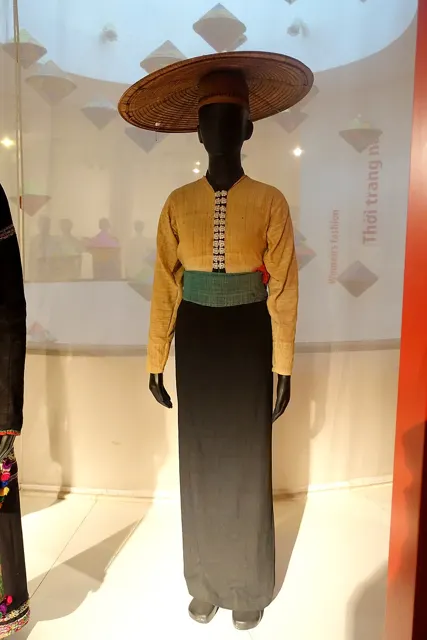
Dress: Thái women wear a short, close-fitting blouse in many colours, fastened down the front with silver buttons shaped like butterflies, spiders or cicadas. With it go a dark tubular skirt, a green silk sash at the waist and a silver chatelaine at the hip. For festivals they add a long black tunic. Black Thái women are known for the khăn piêu headscarf, embroidered in bright colours.
Mường
The closest relatives of the Kinh, sharing the same root language. Mai Châu is a mix of Thái and Mường, and Bá Thước is one of the old Mường heartlands.
Food: Steaming is the signature technique: sticky rice, plain rice, greens and fish are all steamed.
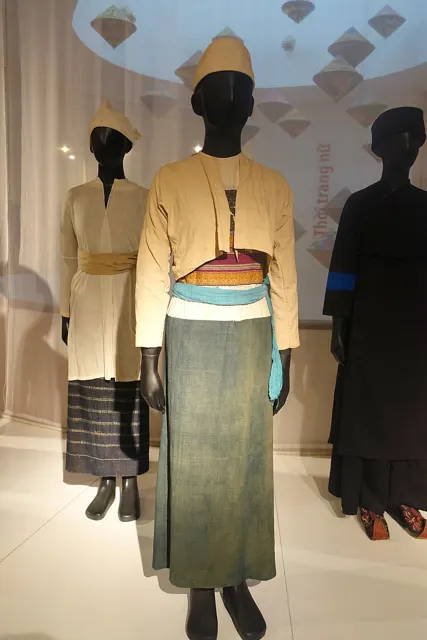
Dress: Mường women's dress is elegant and modest: a plain white rectangular headscarf, a very short blouse, usually white and open at the chest, a bib and an ankle-length skirt. The skirt's waistband is famous for its finely woven patterns. Jewellery includes bracelets, beads and a silver chatelaine of two or four chains hung with a peach-shaped betel box and silver-capped tiger or bear claws.
Military history and figures
This section covers Days 32 and 33.
Military history
- Lam Sơn into Nghệ An, 1424. In 1424, on the advice of Nguyễn Chích, Lê Lợi moved his army south through these western mountains into Nghệ An. It was the turning point of the Lam Sơn rising.
- Kỳ Sơn. Today’s QL7 runs on to Laos. It was a supply route in the wars of the 20th century.
Linked figures
- Lê Lợi.
- Nguyễn Chích.