Setting
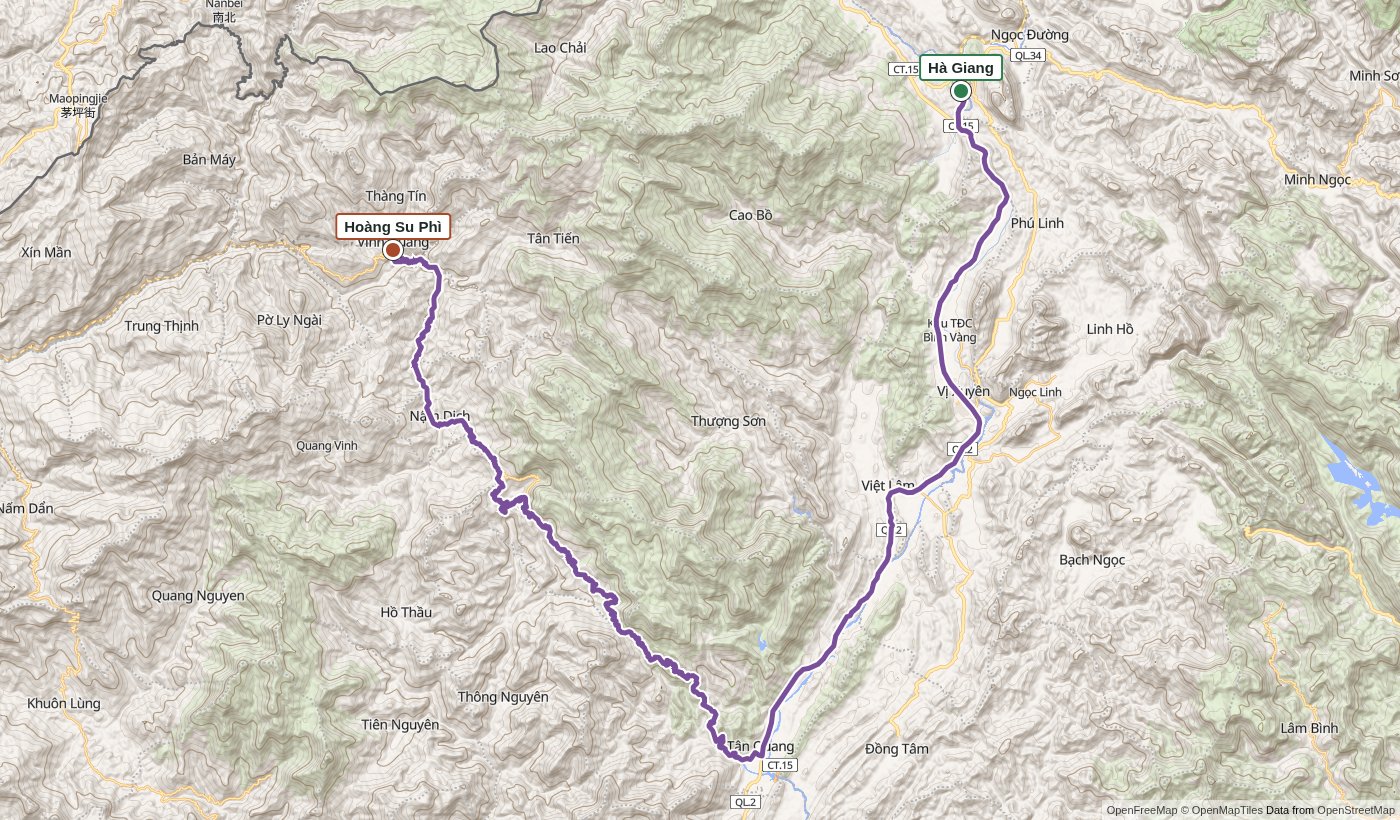
The road runs west up the Chảy river side of the Tây Côn Lĩnh massif, one of the highest mountains in the north-east. Hoàng Su Phì is a district of earth mountains, not limestone, sculpted into rice terraces.
Story
The Hoàng Su Phì terraces were declared a national heritage in 2012. They cover six communes, including Bản Luốc, Bản Phùng, Hồ Thầu and Nậm Ty, and were made over centuries by the La Chí, Dao and Nùng. In spring the fields are flooded for planting and shine like mirrors; they turn green in summer and gold before the autumn harvest.
People
La Chí, Red Dao, Nùng, Cờ Lao and Tày.
Population and livelihoods
Hoàng Su Phì is a farming district. About a third of its people live in very difficult conditions, and the economy rests on farming: Shan Tuyết tea, black cardamom, and buffalo and cattle. Its rice terraces cover about 1,380 ha across 11 communes and are a national heritage site, so tourism at harvest time now adds an income. The old Shan Tuyết tea trees, some hundreds of years old, are picked by Dao and La Chí families and sold to local tea factories.
What makes it special
These terraces rival those of Mù Cang Chải but see a fraction of the visitors. The La Chí are one of Vietnam’s smaller ethnic groups.
The peoples in more detail
Along the way: La Chí, Red Dao, Nùng, Cờ Lao, Tày.
La Chí
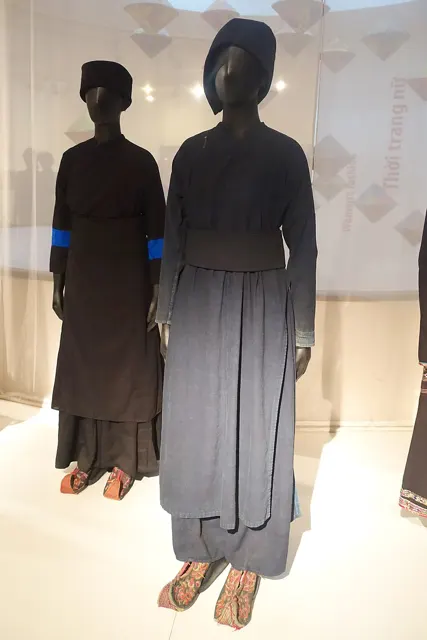
Skilled terrace builders and indigo dyers who wear long dark tunics. They are among the groups who built Hoàng Su Phì's famous rice terraces.
Food: Rice is boiled in a large pan and then steamed, so it stays dry and soft.
Dress: The traditional outfit is a long four-panel tunic open at the front, an embroidered bib and a cloth belt. At Tết and festivals people wear three long tunics, one over another. Women wear a headscarf almost three metres long, with earrings and bracelets, and dark indigo is the favourite colour. Ritual leaders have their own ankle-length robe and a wide cloth hat.
Dao (Yao, Mien)
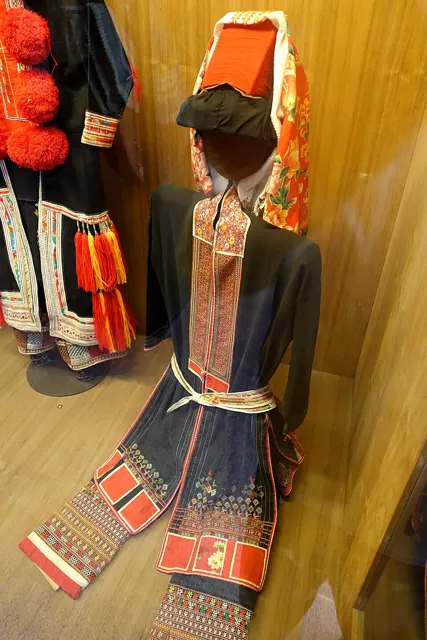
A large group with many branches, each with its own dress. In Bình Liêu you'll see Dao Thanh Y and Dao Thanh Phán, around Ba Bể the Dao live on the hillsides, at Bắc Hà market Black Dao come in, and in Sa Pa and Hoàng Su Phì there are Red Dao, with red pom-pom headdresses.
Food: Two main meals a day, of rice or, in some places, maize or rice porridge.
Dress: Dress varies more than in any other group, and each branch ties its headscarf in its own way. Red Dao women wind their hair up under the headscarf on top of the head. Their tunic has a brightly embroidered collar, and the bib carries eight-petalled flowers worked in silver. Women embroider from memory rather than from a drawn pattern, stitching on the back of the cloth so the design stands out on the front. They also print patterns in hot beeswax before dyeing, which leaves pale blue motifs on the indigo. Dao silversmiths make the neck rings, bracelets, anklets, earrings and betel boxes.
Nùng
Close relatives of the Tày, with similar stilt houses and plain indigo clothes. Many sub-groups take their names from places in southern China: Nùng An, Nùng Dín, Nùng Phàn Slình and others.
Food: In many places maize is the staple, ground and cooked into a thick porridge.
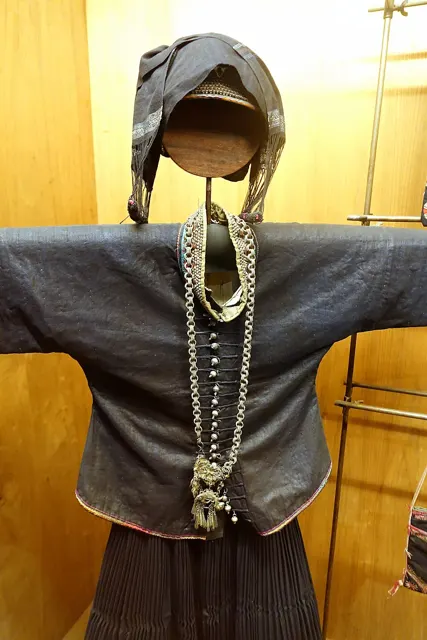
Dress: Simple clothes of coarse home-woven cotton dyed indigo, with hardly any decoration. Men wear a jacket with a stand-up collar and a row of cloth buttons down the front. Women wear a five-panel tunic fastened under the right arm, reaching just below the hips. The local sub-groups are named partly after small differences in this dress.
Cờ Lao (Gelao)
A very small group in Hà Giang. On the rocky plateau they grow maize in pockets of soil between the limestone, with ash and manure worked into each planting hole.
Food: Maize as mèn mén, or rice, eaten from wooden bowls with wooden spoons and ladles.
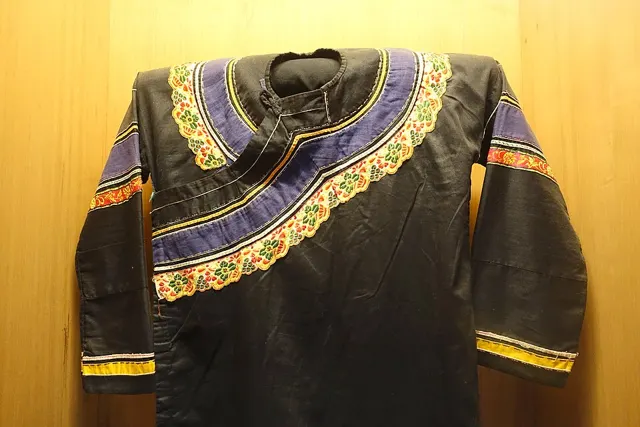
Dress: Women wear a tunic like those of the Nùng and Giáy but reaching below the knee, decorated with patches of coloured cloth on the opening, chest and sleeves. White and Green Cờ Lao women once wore a short-sleeved jacket over it to show off the patches on the inner sleeves, with leggings. The long-sleeved inner tunic is still worn; the outer jacket is now rare.
Tày (Thổ, old name)
Valley rice farmers who live in timber stilt houses and wear plain indigo-dyed clothes. They are the majority in Bình Liêu and have lived around Ba Bể for about 2,000 years; Pác Ngòi is a Tày village.
Food: Sticky rice was once the staple, and most homes still have a steamer for it.
Dress: Plain clothes of home-woven cotton, dyed indigo and almost never embroidered. Women wear a short blouse under a long tunic, with a skirt or trousers. The local sub-groups differ in detail: the Ngạn wear a slightly shorter tunic, the Phén wear brown, the Thu Lao wind their headscarf into a point on top of the head, and the Thổ dress like the Thái of Mai Châu.
Military history and figures
Military history
- Vị Xuyên front, 1984–89. At Việt Lâm the road passes through Vị Xuyên district, the scene of the longest and costliest phase of the border war. For five years Vietnamese and Chinese forces fought over the hills either side of the Lô river, above all Hill 1509 (Núi Đất). Veterans call it the “lime kiln of the century”. The war was little reported in Vietnam at the time.
- Vị Xuyên National Martyrs’ Cemetery. The cemetery, just off the road, holds the graves of many of those who died on the front.
Linked figures
The ordinary soldiers of the front are the figures here. No commander is singled out in the public record.
Practical notes
- Rice terraces.