Setting
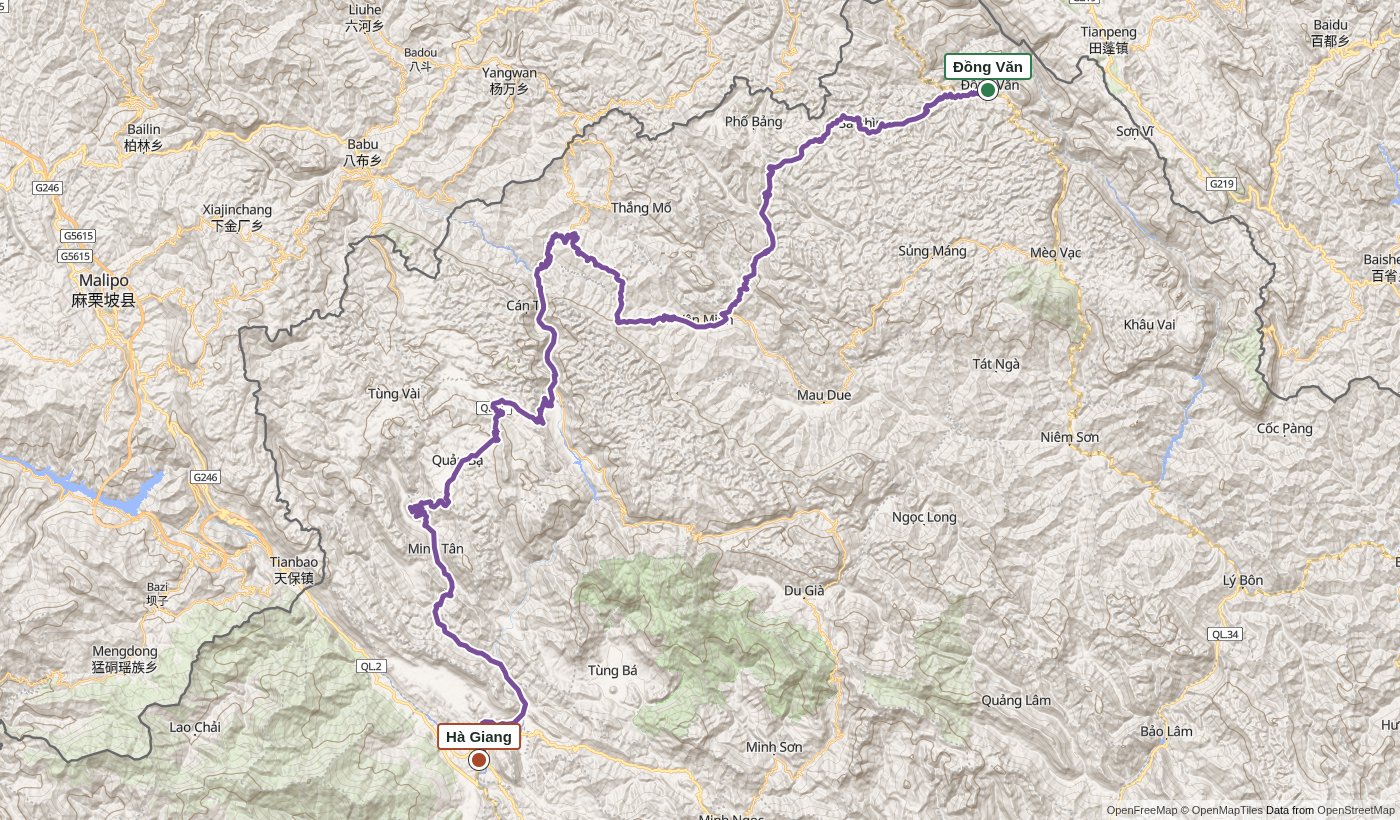
The road crosses the plateau through Sà Phìn, Yên Minh and Quản Bạ and comes down through Heaven Gate, at about 1,500 m, to the Lô river valley at Hà Giang.
Story
At Sà Phìn the Vương (Hmong king) family palace was built between 1898 and 1903 for Vương Chính Đức. He was the Hmong chief who controlled the plateau and its opium trade under the French. The stone and timber palace mixes Hmong, Chinese and French architecture. From Quản Bạ Heaven Gate you look down over the valley and the “Twin Mountains” (Núi Đôi) of local legend.
People
Hmong (Vương Palace), Pu Péo, Giáy, Bố Y, Cờ Lao, Dao and Tày.
Population and livelihoods
Hà Giang town had about 56,000 people in 2019. Since 2025 it has been part of a merged Tuyên Quang province of about 1.86 million. The town lives on administration, trade and tourism. In 2024 the old Hà Giang province received 3.2 million visitors and earned about VND 8,150 billion (roughly €270 million) from them. Many of the hotels, motorbike-rental firms and easy-rider guides of the Hà Giang loop are based here.
What makes it special
The Vương palace is the best surviving reminder of the opium-financed “kings” of the highlands. Heaven Gate gives the classic last look back at the rocky plateau.
The peoples in more detail
Along the way: Hmong (Vương Palace), Pu Péo, Giáy, Bố Y, Cờ Lao, Dao, Tày.
Hmong (H'Mông, Mèo, old name, now avoided)
The people you'll see most in the high country. They make up about 72% of the Đồng Văn plateau and about half of Sa Pa, and Mường Lống is entirely Hmong.
Food: Two meals a day, three at harvest.
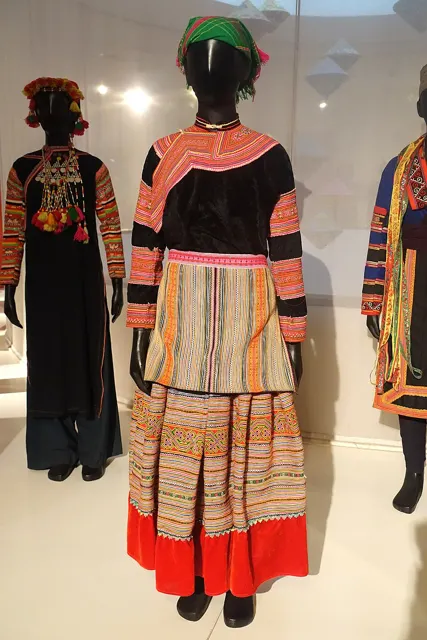
Dress: The most colourful dress in the north, and different for each branch. White Hmong women grow hemp and weave linen, and wear white skirts with an open-fronted blouse embroidered on the sleeves and a panel at the back of the collar. Flower Hmong women, whom you'll see at Bắc Hà, wear indigo skirts embroidered or printed with beeswax batik, with appliqué and embroidery across the shoulders and chest. Black Hmong women around Sa Pa wear indigo skirts patterned with beeswax and an open-fronted blouse. Green Hmong women wear a tubular skirt, and once married wind their hair up with a horseshoe comb under a headscarf shaped like two horns. Decoration is mostly appliqué, with spirals, squares, lozenges and crosses as the common motifs.
Pu Péo (Ka Beo)
One of Vietnam's smallest groups, almost all of them on the Hà Giang plateau. Like the Lô Lô, they keep pairs of 'male' and 'female' bronze drums.
Food: Steamed maize flour and soup, which is sipped with a spoon.
Dress: Women's skirts and blouses are decorated only with appliqué. The blouse comes in two layers. The outer one is open at the front with no buttons, its hem and opening edged with triangles, squares and lozenges of other colours, and the cuffs ringed with coloured bands. The short inner one fastens under the right arm. The skirt hem carries a band of cut squares and triangles.
Giáy (Nhắng)
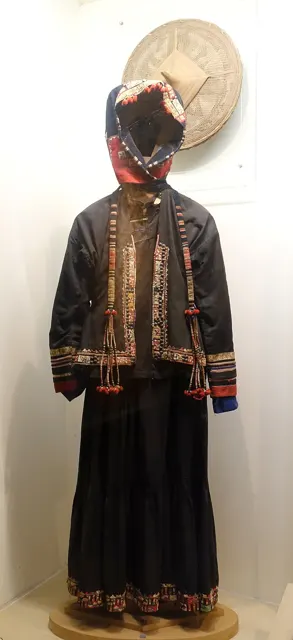
Skilled terrace rice farmers. Women wear indigo trousers and a long five-panel jacket that fastens under the right arm, with their hair wound round the head and pink threads at the ends.
Food: Plain rice that is part-boiled and then steamed like sticky rice.
Dress: Women once wore pleated skirts like the Hmong. Today they wear indigo-black trousers with a band of red at the waist and a five-panel tunic slit at the sides, reaching below the hips and fastened under the right arm, with the hem and cuffs bordered in other colours. Men wear loose trousers and a jacket open at the front. Dress varies by area: in Hà Giang women wear a skirt and a long tunic close to the Nùng style, while in Lào Cai they wear trousers and a short tunic.
Bố Y
A very small group that came from China about 150 years ago. They live in earth-walled houses with tiled or wooden roofs.
Food: Mèn mén, steamed ground maize, like their Hmong neighbours.
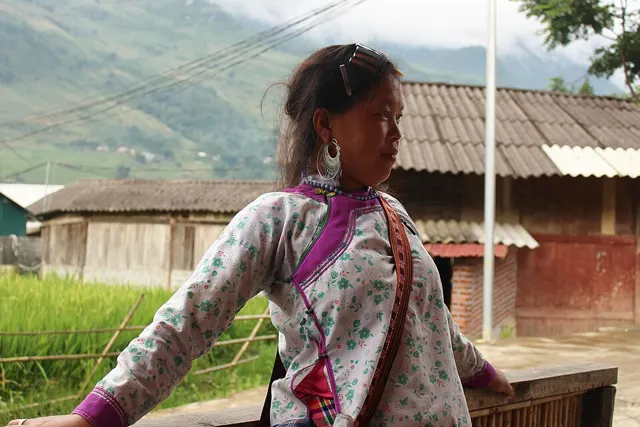
Dress: Women's dress is known for its cool colours, beeswax-batik skirts and a long bib across the chest. They once wore flared skirts like those of the Hmong, and tied their hair up under an indigo headscarf embroidered in coloured thread, with silver necklaces, bracelets and earrings. Weaving and dyeing are dying out, and most Bố Y now dress like their Nùng neighbours. Women of the Tu Dí branch dress in Han Chinese style, with detachable sleeves.
Cờ Lao (Gelao)
A very small group in Hà Giang. On the rocky plateau they grow maize in pockets of soil between the limestone, with ash and manure worked into each planting hole.
Food: Maize as mèn mén, or rice, eaten from wooden bowls with wooden spoons and ladles.
Dress: Women wear a tunic like those of the Nùng and Giáy but reaching below the knee, decorated with patches of coloured cloth on the opening, chest and sleeves. White and Green Cờ Lao women once wore a short-sleeved jacket over it to show off the patches on the inner sleeves, with leggings. The long-sleeved inner tunic is still worn; the outer jacket is now rare.
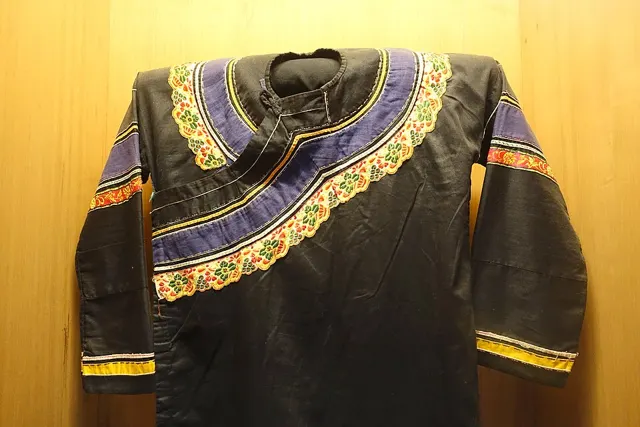
Dao (Yao, Mien)
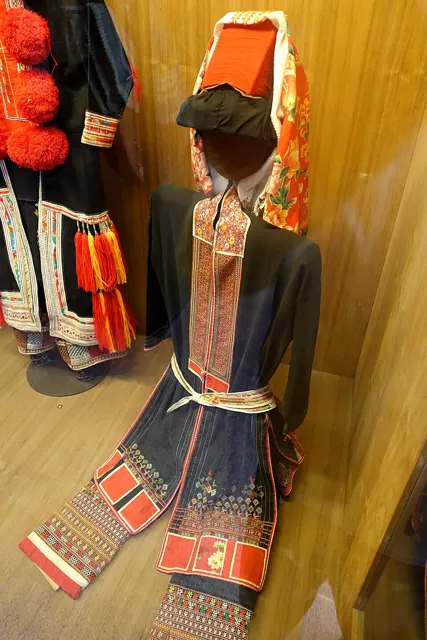
A large group with many branches, each with its own dress. In Bình Liêu you'll see Dao Thanh Y and Dao Thanh Phán, around Ba Bể the Dao live on the hillsides, at Bắc Hà market Black Dao come in, and in Sa Pa and Hoàng Su Phì there are Red Dao, with red pom-pom headdresses.
Food: Two main meals a day, of rice or, in some places, maize or rice porridge.
Dress: Dress varies more than in any other group, and each branch ties its headscarf in its own way. Red Dao women wind their hair up under the headscarf on top of the head. Their tunic has a brightly embroidered collar, and the bib carries eight-petalled flowers worked in silver. Women embroider from memory rather than from a drawn pattern, stitching on the back of the cloth so the design stands out on the front. They also print patterns in hot beeswax before dyeing, which leaves pale blue motifs on the indigo. Dao silversmiths make the neck rings, bracelets, anklets, earrings and betel boxes.
Tày (Thổ, old name)
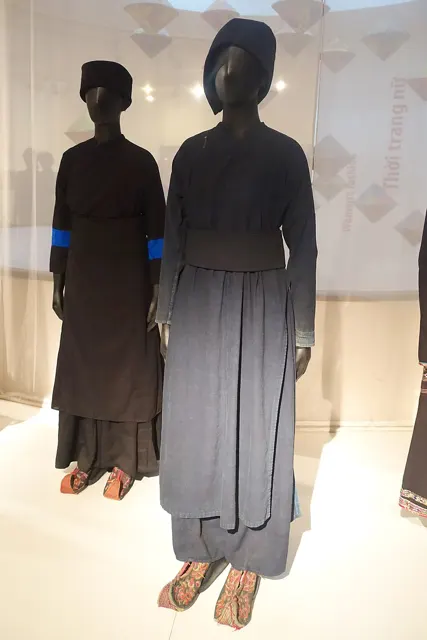
Valley rice farmers who live in timber stilt houses and wear plain indigo-dyed clothes. They are the majority in Bình Liêu and have lived around Ba Bể for about 2,000 years; Pác Ngòi is a Tày village.
Food: Sticky rice was once the staple, and most homes still have a steamer for it.
Dress: Plain clothes of home-woven cotton, dyed indigo and almost never embroidered. Women wear a short blouse under a long tunic, with a skirt or trousers. The local sub-groups differ in detail: the Ngạn wear a slightly shorter tunic, the Phén wear brown, the Thu Lao wind their headscarf into a point on top of the head, and the Thổ dress like the Thái of Mai Châu.
Military history and figures
Military history
The day passes the Vương Palace at Sà Phìn. It was built in 1898–1928 for the Hmong ruler of the plateau and fortified with stone walls and gun loops.
Linked figures
- Vương Chính Đức, who held the plateau as “King of the Hmong” (Vua Mèo) under the French.
- His son Vương Chí Sình (1886–1962). He sided with the new government after 1945, became Hồ Chí Minh’s sworn brother and gave about 9 kg of gold to the revolution. He later sat in the National Assembly.
Practical notes
- Passes the Vương Palace at Sà Phìn.