Setting
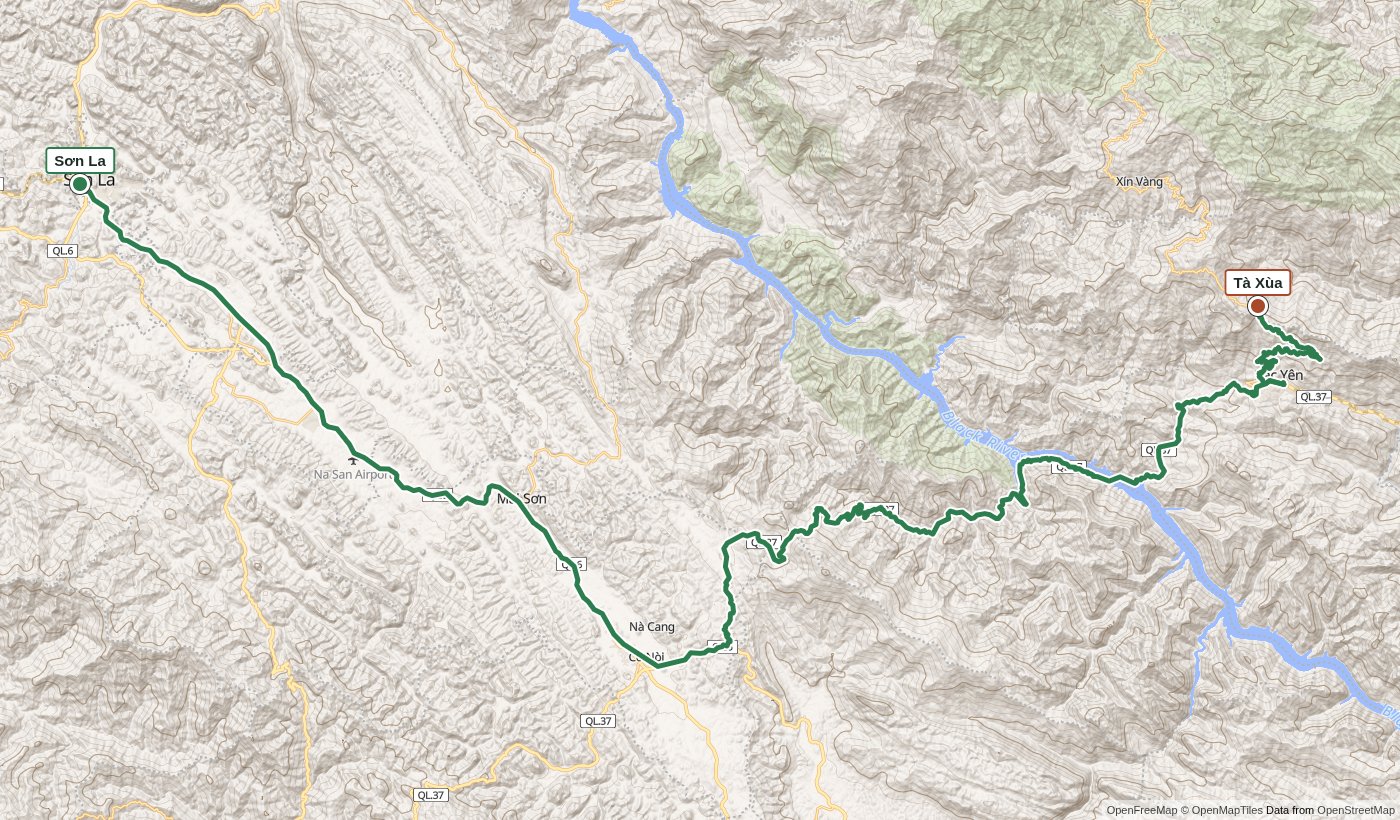
The road goes east through Mai Sơn and down to the Đà river at Tạ Khoa, then climbs steeply to Bắc Yên and Tà Xùa, at over 1,500 m. Tà Xùa sits on the ridge between Sơn La and Yên Bái (now Lào Cai).
Story
Until 2003 the Đà was crossed here by the Tạ Khoa ferry. The 550 m bridge opened that year and opened up Bắc Yên. Tà Xùa is famous for its “sea of clouds” and for ancient Shan Tuyết tea trees, some of them several hundred years old.
People
Black Thái and Mường lower down, Hmong at Tà Xùa.
Population and livelihoods
Tà Xùa commune has nearly 12,000 people, most of them Hmong. The traditional living is maize, upland rice and livestock, and Shan Tuyết tea. The old commune has about 300 ha of tea, including about 40 ha of ancient trees, some 100 to 300 years old. Down the mountain, Bắc Yên is farming country: rice, maize and cattle.
What makes it special
Tà Xùa sits above the clouds on most mornings. A glass of Shan Tuyết tea from trees older than the French colony is a fine way to end the day.
The peoples in more detail
Along the way: Black Thái, Mường, Hmong at Tà Xùa.
Thái (Tai Dam, Tai Don)
This is the people of the Days 16–24 valleys. Black Thái live around Sơn La and Điện Biên, and White Thái around Mai Châu.
Food: Sticky rice steamed in a wooden steamer is the traditional staple, though plain rice is now the everyday grain.
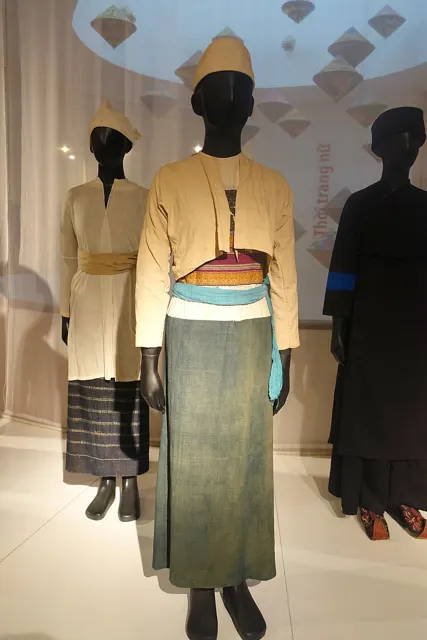
Dress: Thái women wear a short, close-fitting blouse in many colours, fastened down the front with silver buttons shaped like butterflies, spiders or cicadas. With it go a dark tubular skirt, a green silk sash at the waist and a silver chatelaine at the hip. For festivals they add a long black tunic. Black Thái women are known for the khăn piêu headscarf, embroidered in bright colours.
Mường
The closest relatives of the Kinh, sharing the same root language. Mai Châu is a mix of Thái and Mường, and Bá Thước is one of the old Mường heartlands.
Food: Steaming is the signature technique: sticky rice, plain rice, greens and fish are all steamed.
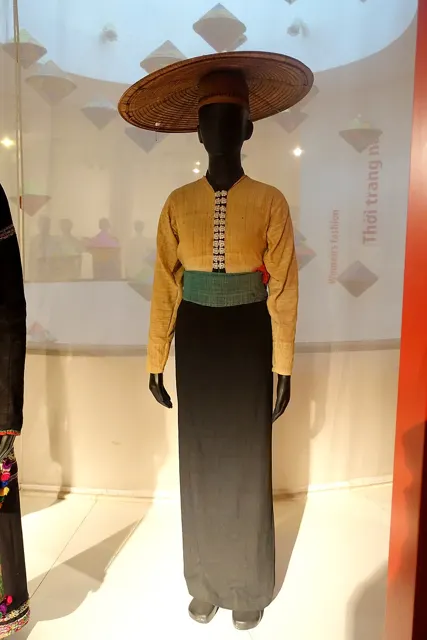
Dress: Mường women's dress is elegant and modest: a plain white rectangular headscarf, a very short blouse, usually white and open at the chest, a bib and an ankle-length skirt. The skirt's waistband is famous for its finely woven patterns. Jewellery includes bracelets, beads and a silver chatelaine of two or four chains hung with a peach-shaped betel box and silver-capped tiger or bear claws.
Hmong (H'Mông, Mèo, old name, now avoided)
The people you'll see most in the high country. They make up about 72% of the Đồng Văn plateau and about half of Sa Pa, and Mường Lống is entirely Hmong.
Food: Two meals a day, three at harvest.
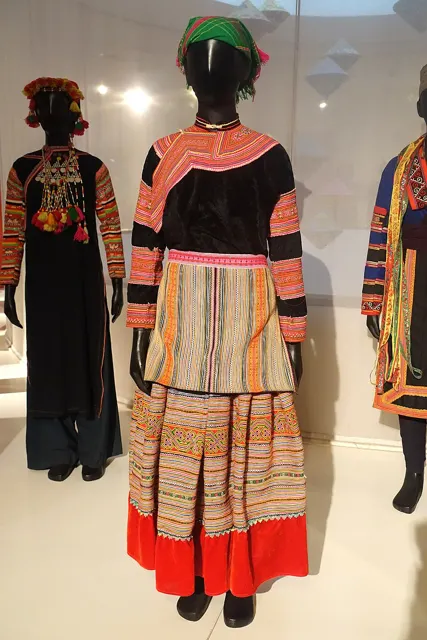
Dress: The most colourful dress in the north, and different for each branch. White Hmong women grow hemp and weave linen, and wear white skirts with an open-fronted blouse embroidered on the sleeves and a panel at the back of the collar. Flower Hmong women, whom you'll see at Bắc Hà, wear indigo skirts embroidered or printed with beeswax batik, with appliqué and embroidery across the shoulders and chest. Black Hmong women around Sa Pa wear indigo skirts patterned with beeswax and an open-fronted blouse. Green Hmong women wear a tubular skirt, and once married wind their hair up with a horseshoe comb under a headscarf shaped like two horns. Decoration is mostly appliqué, with spirals, squares, lozenges and crosses as the common motifs.
Military history and figures
Military history
- Nà Sản, 1952. At Mai Sơn, where the road turns off QL6, the French built a fortified “hedgehog” camp supplied by air. Between 23 November and 2 December 1952 it beat off Việt Minh assaults. The French drew the wrong lesson from it, and it became the model for Điện Biên Phủ.
- Tạ Khoa. The Tạ Khoa crossing of the Đà river was among the French positions abandoned during the Northwest Campaign of October–December 1952.
Linked figures
- Colonel Jean Gilles, the French commander at Nà Sản.
- Võ Nguyên Giáp, who commanded the Northwest Campaign.
Practical notes
- Arrive around midday and settle in; cloud viewpoints around Tà Xùa.
- The new part of this track, from Cò Nòi onwards, was drawn with a routing service and the road surface has not been checked. Ask locally the evening before.