Setting
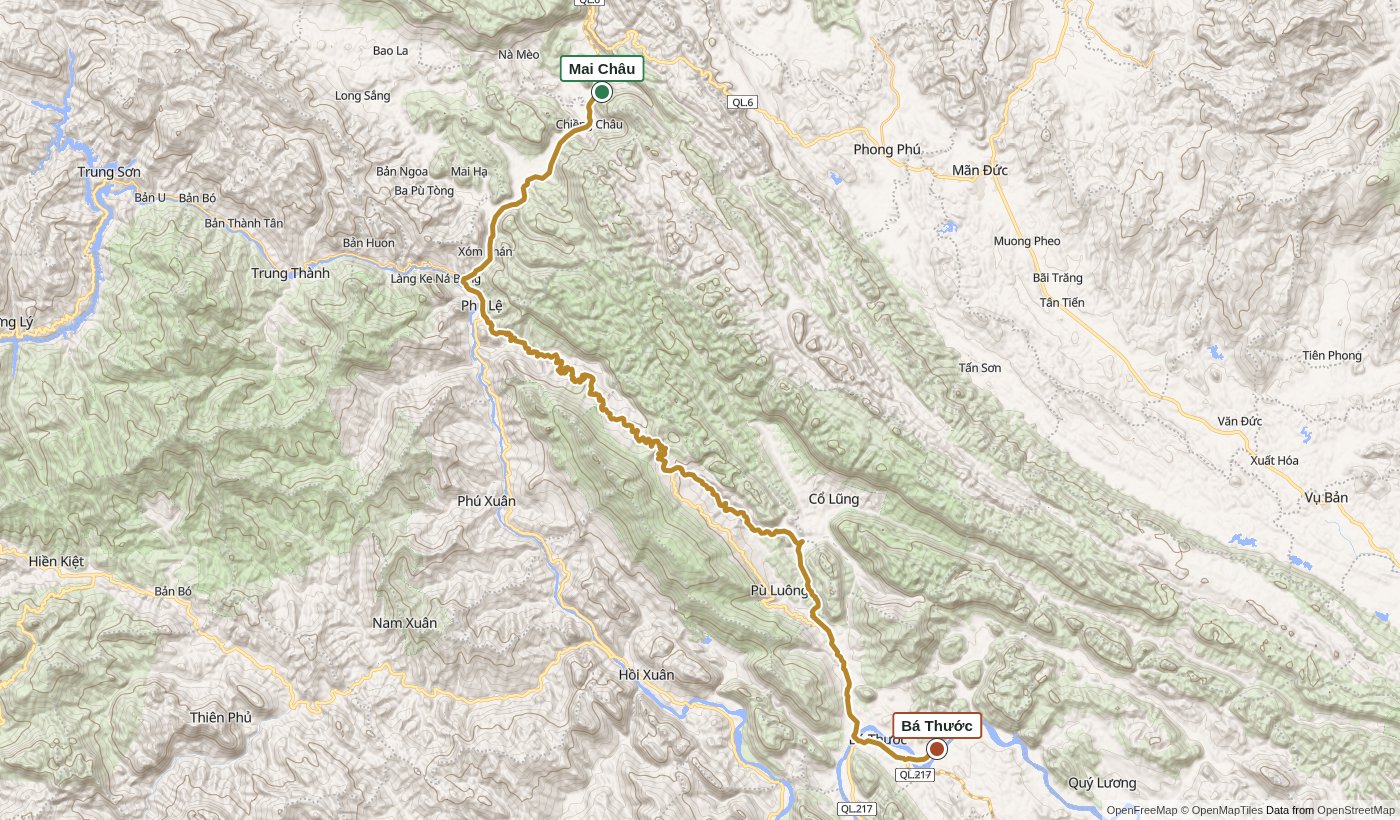
This is a short day south over the hills into Thanh Hóa and through the Pù Luông nature reserve. Two parallel limestone ridges run north-west to south-east, with terraces and Thái villages in between.
Story
Pù Luông was established in 1999 and covers 17,662 ha, of which 13,320 ha are strictly protected.
People
White Thái and Mường.
Population and livelihoods
Bá Thước, now part of several new communes in western Thanh Hóa, is farming and forestry country: rice in the valleys, maize, cassava, bamboo and acacia on the slopes. Tourism has grown fast around Pù Luông. In 2024 the area received about 250,000 visitors, worth about VND 250 billion (roughly €8 million). There are more than 80 places to stay, most of them homestays and small resorts.
What makes it special
Pù Luông has water wheels, terraces and bamboo houses, and a pace of life that is hard to find nearer Hà Nội.
The peoples in more detail
Along the way: White Thái, Mường.
Thái (Tai Dam, Tai Don)
This is the people of the Days 16–24 valleys. Black Thái live around Sơn La and Điện Biên, and White Thái around Mai Châu.
Food: Sticky rice steamed in a wooden steamer is the traditional staple, though plain rice is now the everyday grain.
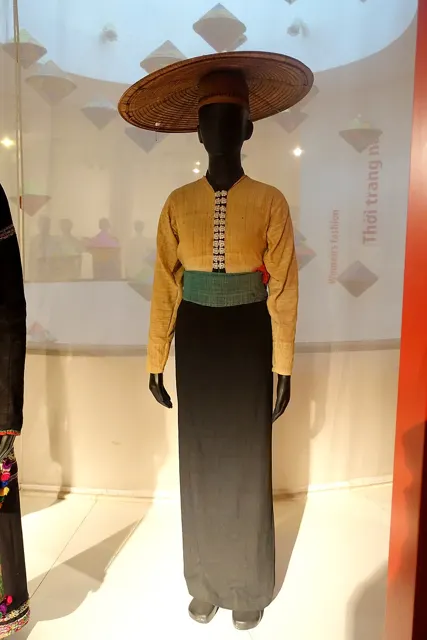
Dress: Thái women wear a short, close-fitting blouse in many colours, fastened down the front with silver buttons shaped like butterflies, spiders or cicadas. With it go a dark tubular skirt, a green silk sash at the waist and a silver chatelaine at the hip. For festivals they add a long black tunic. Black Thái women are known for the khăn piêu headscarf, embroidered in bright colours.
Mường
The closest relatives of the Kinh, sharing the same root language. Mai Châu is a mix of Thái and Mường, and Bá Thước is one of the old Mường heartlands.
Food: Steaming is the signature technique: sticky rice, plain rice, greens and fish are all steamed.
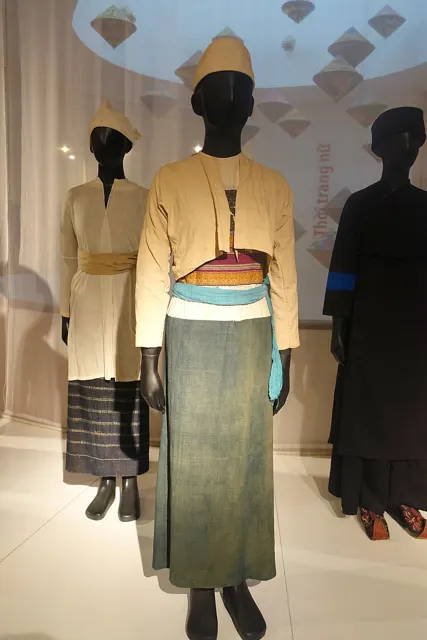
Dress: Mường women's dress is elegant and modest: a plain white rectangular headscarf, a very short blouse, usually white and open at the chest, a bib and an ankle-length skirt. The skirt's waistband is famous for its finely woven patterns. Jewellery includes bracelets, beads and a silver chatelaine of two or four chains hung with a peach-shaped betel box and silver-capped tiger or bear claws.
Military history and figures
This section covers Days 29 and 30.
Military history
These Thái and Mường hills supported the Cần Vương (“aid the king”) resistance to the French in the 1880s–90s.
Linked figures
- Cầm Bá Thước (Lò Cắm Pán, 1858–1895), a Thái leader from Thường Xuân. He led the Cần Vương rising in western Thanh Hóa, was captured and executed in 1895. Bá Thước district is named after him.